A Walk to Kurhaus (Kurhaus I)

DSC01203-k

DSC01205-k

DSC01209-k

Upon taking a walk, visitors and Wiesbadeners alike will not really get around Kurhaus, the grand building that houses concert halls, a restaurant, and a casino famous for players like Fyodor Dostoevsky – his novel The Gambler is said to be based on the author’s own experience in Wiesbaden. The building seems to be the city’s (romantic?) heart.

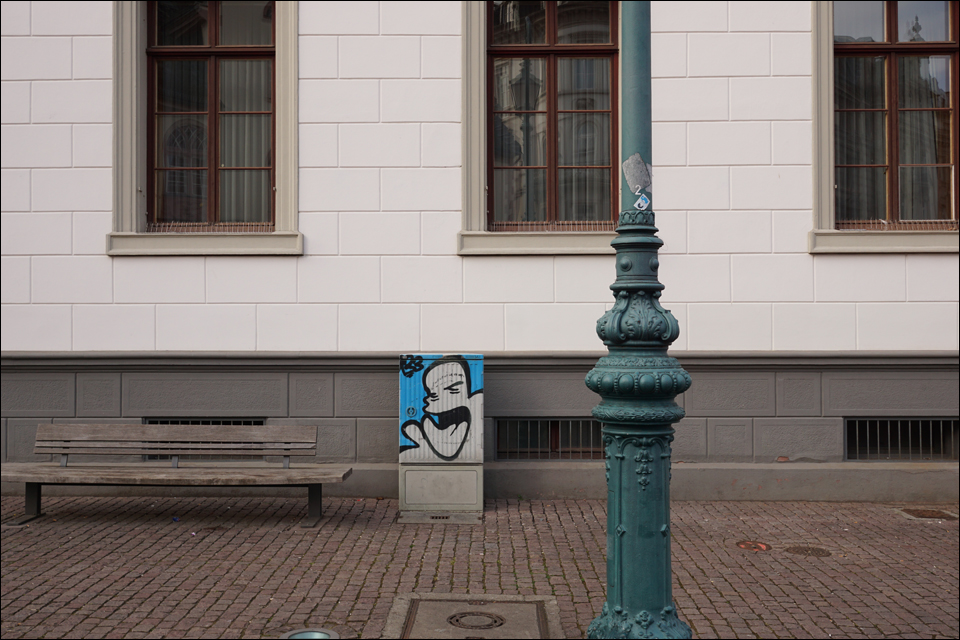
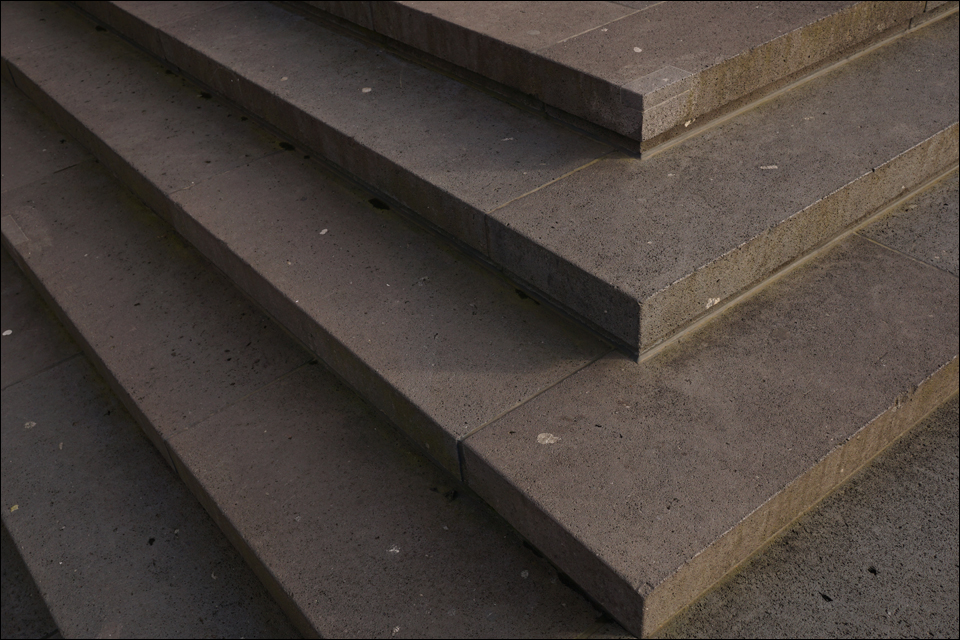
If so, the nearby market place may the be the lungs… Which is where we departed for today’s walk, visually sniffing like a happy dog at some of the things along the way. We have had a look at the former palace, walked along the steps of the ‘new’ city hall, and seen a bit of its ornaments (above).

Turning around, we cannot miss Marktirche (‘Market Church’), a spectacular orange brick building that has already been photographed a million times. I think it is considered Wiesbaden’s capital church, and as history has it, it is protestant.  We rush along its walls towards the doors one of the city’s finest cinemas, Caligari (bottom) where a beautiful Art Deco interior is still intact. However, we will stay outside today – or we’ll never arrive at Kurhaus!

DSC01301-dk

DSC01302-dk

DSC01217-k

DSC01304-dk

Turning left and then right again, one of the city’s nicer arcades takes us to Wilhelmstraße, dominated here by the Theatre of the State (Hessisches Staatstheater). We sneak past the back side, taking in the closed faded curtains, and finally find ourselves in front of the Kurhaus’ revolving doors which I reserve for next Monday’s post: It will not be a long walk, but I consider it worth while, so that will be part of Jo’s Monday Walks (hoping that’s fine by our hostess).
DSC01224-k

DSC01248-k

DSC01253-k

2/3. Imagine

DSC00824-k
DSC00942-k
DSC00950-k

What if every picture of the 2/3 series were a word? Each one acquires part of its meaning through a certain use in a certain context, any single picture relating to the sequence the way a word relates to a sentence, sentences after sentences – sequence after sequences – woven into a narrative. And then there are the simple words and the complex ones, some of them able to stand alone while others do not mean much outside the structure of the sentence. This might be the field I am currently playing on.

(I arrived at this short description because it seemed clear from the beginning that I might post the same picture more than once, depending on the use I might have for it in different contexts. That’s how I arrived at language: I also use some words more than once, and while they always almost mean the same, the sentences they are part of mean very different things.

You’ve seen two of the above pictures already, but I needed the car for obvious reasons. But was it necessary to re-post the last picture as well? Deleting it from this sequence felt like something went missing, so: yes, had to re-post it!)

2/3. Faces of Hamburg

DSC01082-k

DSC01045-k

DSC00967-k

DSC00961-k

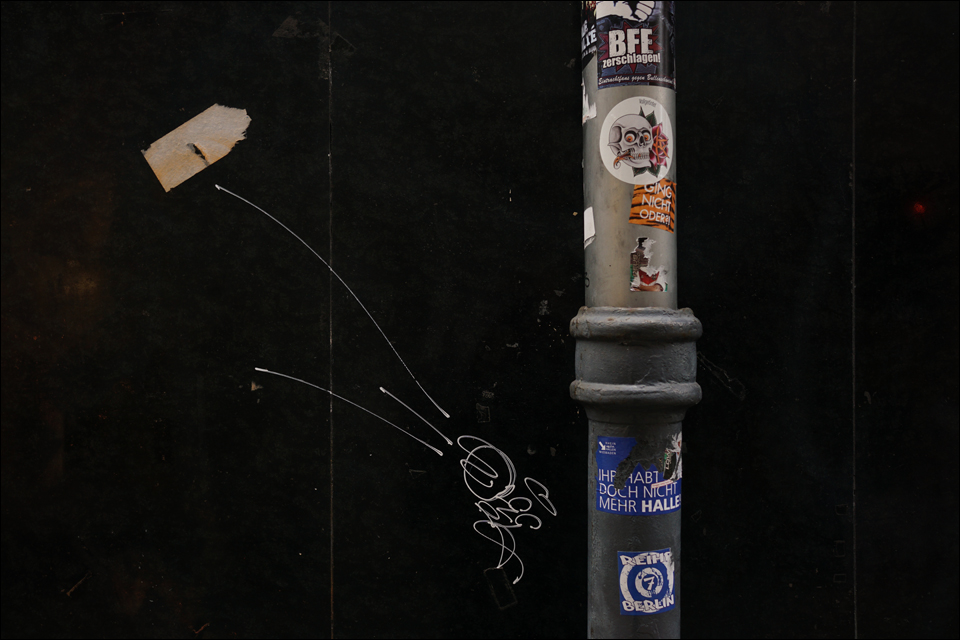
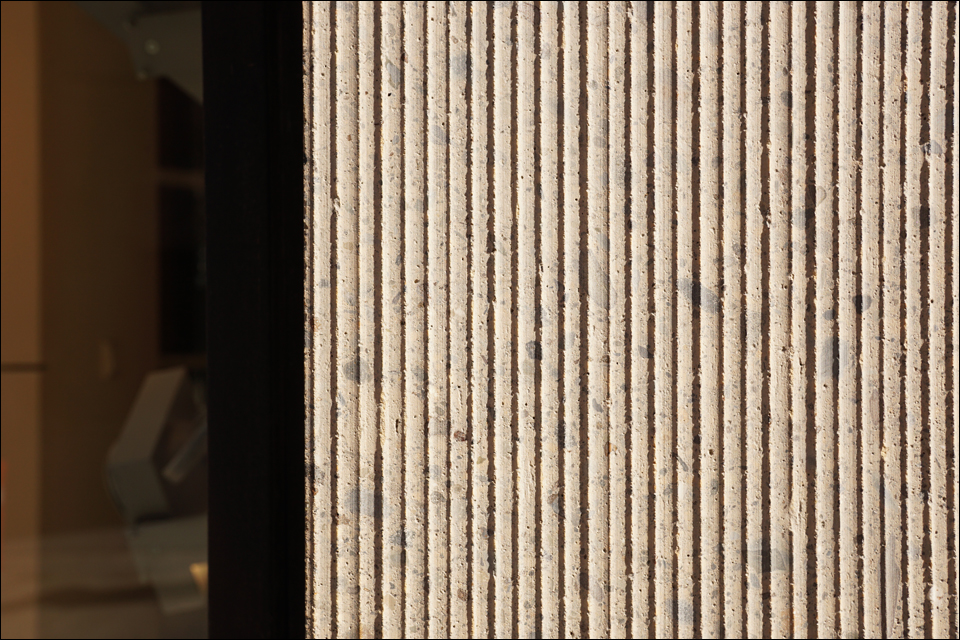
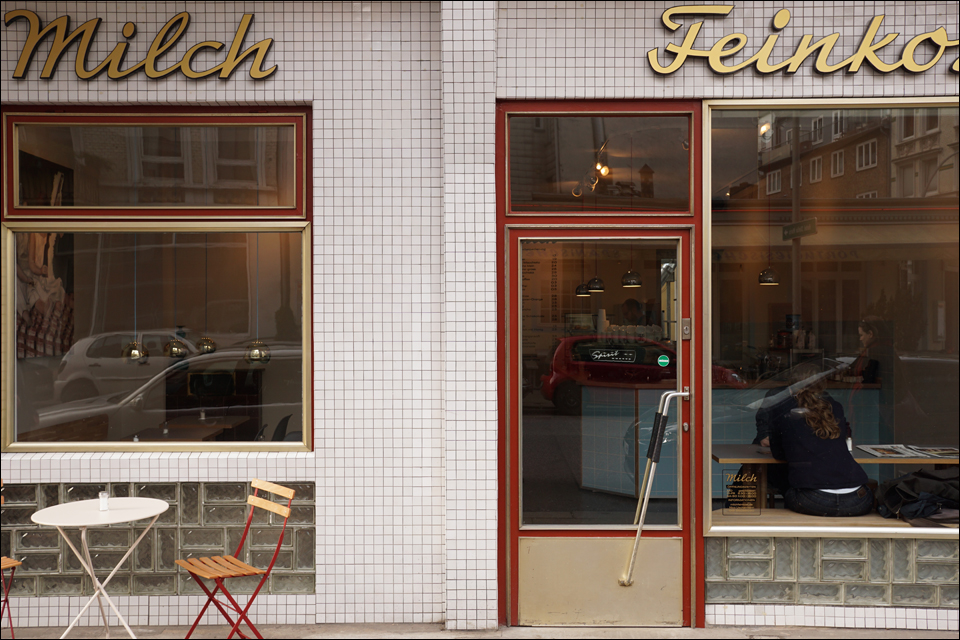
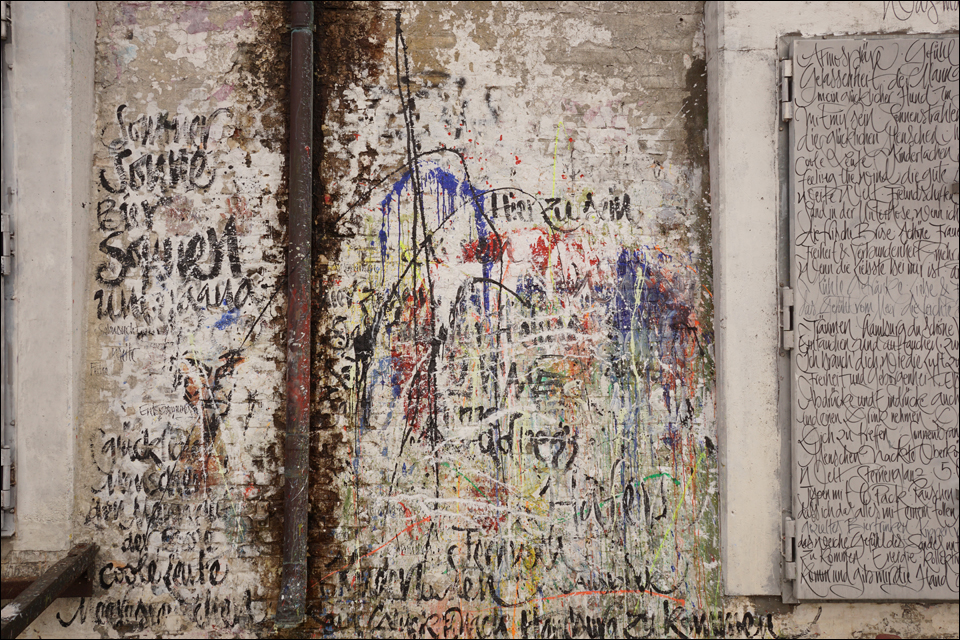
Though these pictures were made in the course of two different walks, I saved them for Jo’s Monday Walk – they just seem adequate because they were literally made en passant. And they show different faces of the same city: nostalgic, rough, sumptuous, utilitarian. The latter two are less than 200 meters apart, by the way, while the first two are not far from the Elbe river.

Project 03 | Understanding Art. KIT – TAU (2)

aua10
aua14
aua12
aua13
aua11

As I moved around the art, the art moved me..

Kunst im Tunnel (KIT) is one of Düsseldorf’s most original museum spaces. It is literally part of a tunnel, a little odd-shaped piece of concrete left over above the actual tube and beyond a beautiful riverside walk along the Rhine river. It is very low at one end and very narrow at the other, and between the two ends, it is shaped like banana, or rather a banana box. The place is worth a visit in itself.

Tau, on he other hand, is the German word for both dew and a rope. It was chosen as a title for the collective exhibition of a class of Düsseldorf’s academy of the fine arts. The leaflet explains that no single work is ascribed to a single artist, thus drawing a parallel to both dew and a rope which are both constituted by smaller elements (the droplets, the single threads).
As a way of exhibiting art, this seems to be halfway between the art school exhibition I showed before and the museum I plan to take you to in some upcoming posts.

Let me just add that being there with a permit to photograph, I felt like a kid in a candy store.

“Let Go of the Urge to Make Sense of What Is Seen”

DSC00718-k
DSC00731-k
DSC00722-k
DSC00711-k

Catching up on Paula’s photo challenge I could not resist this one – which is where I found the great quote I am now using as a title. I hope that these pictures really help you letting go of this urge so that you can “focus […] on the act of seeing rather than the intellectual processes of naming and analysing what is being seen.”

As I am uploading pictures from a new series called 2/3 (for no apparent reason), up pops another challenge: Wall. Well.

Project 03 | Understanding Art. Interjection

aua02

Sometimes even the most dubious characters in a mystery novel have a lot to say. In Ben Aaronovitch’s Whispers Underground, an artist speaks his mind: “There’s no point asking what a piece of work means, you know? If we could express it in words, do you think we would have spent all that time bisecting a cow or pickling a shark? Do you think bisecting a cow is somebody’s idea of a fun fucking afternoon? And then to have stupid people come up to you and say, ‘It’s very interesting, but is it art?’ – yes, it’s fucking art. Do you think I’m planning to eat the fecking thing?” (p. 285)

I kind of like the reasoning here: Art can be defined by the use we make of it. And it is hard to talk about. So why not try to understand it non-verbally? That’s what my March/April project is about. You can participate! Details can be found here and on the ‘2015 Projects’ pages.

Project 03 | Understanding Art

aua03aua01

Making pictures helps me understand history and memory as well as architecture or nature or the aesthetics of a movie. In contrast to scientific understanding, I would like to call the insight I find using photographs aesthetic understanding. The goal may well be beyond language.

Now this idea seems to be supported by a rather new book about visiting museums. Among other things, the author suggests we make photos of the works we see: “Taking pictures is also a way of connecting to and participating in the art, as it unleashes our excitement and involvement. Taking a clever picture can lead to more meaningful interaction with art. […] Challenge yourself, not by attempting to capture the artwork itself, but your experience of it.” (Johan Idema, How To Visit a Museum. Tips for a Truly Awarding Visit. Amsterdam: BIS, 2014)

For this month’s project, the challenge is to make clever photos of a work of art, capturing your experience of it. If the museums you visit are too restrictive about photographing the exhibits, try to find an artwork that is displayed in public – I am sure there will be plenty of them once you start looking.
Since the projects I have in mind for this year are not simple, I decided to switch to a bi-monthly rhythm, giving us all more time to come up with ideas (or time to post more pictures).
The pictures in this post were taken at an art school where I happened to visit a students’ exhibition a couple of weeks ago. The works were on display in the studios, giving the exhibition an atmosphere of authenticity and immediacy, making the visitors part of it all.
Minimalist Life Story

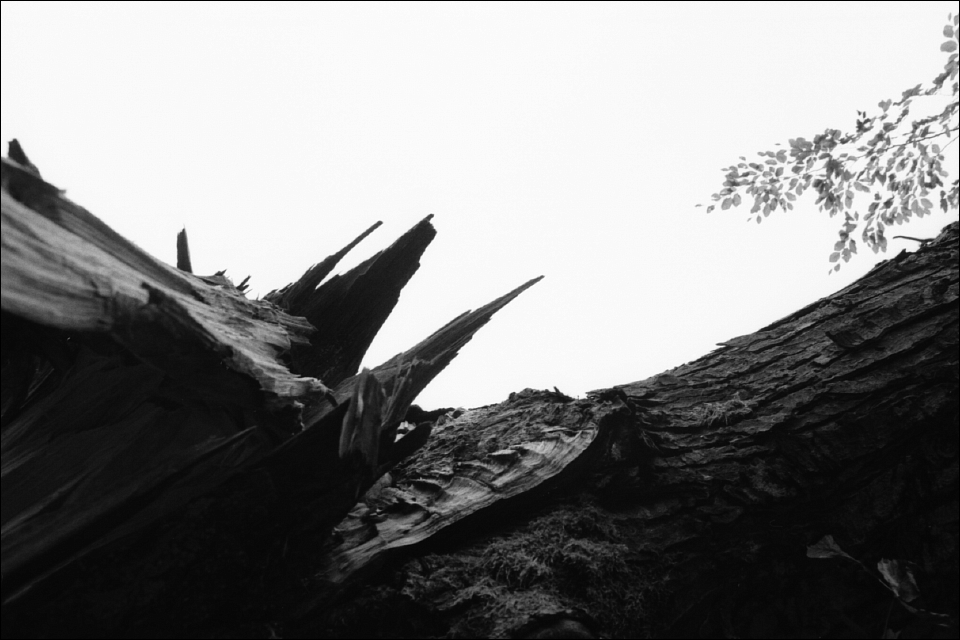
345-23After this year’s summer storms, our forest was no longer the same. But something is always sprouting… My second contribution for this week’s Photo Challenge: “Find an interesting texture, color, or silhouette. Maybe there is a story that you can tell with your minimalist photo. Try an interesting angle with your composition to turn a traditional scene into a minimalist one, by eliminating as much of the extra detail in the background as possible.”