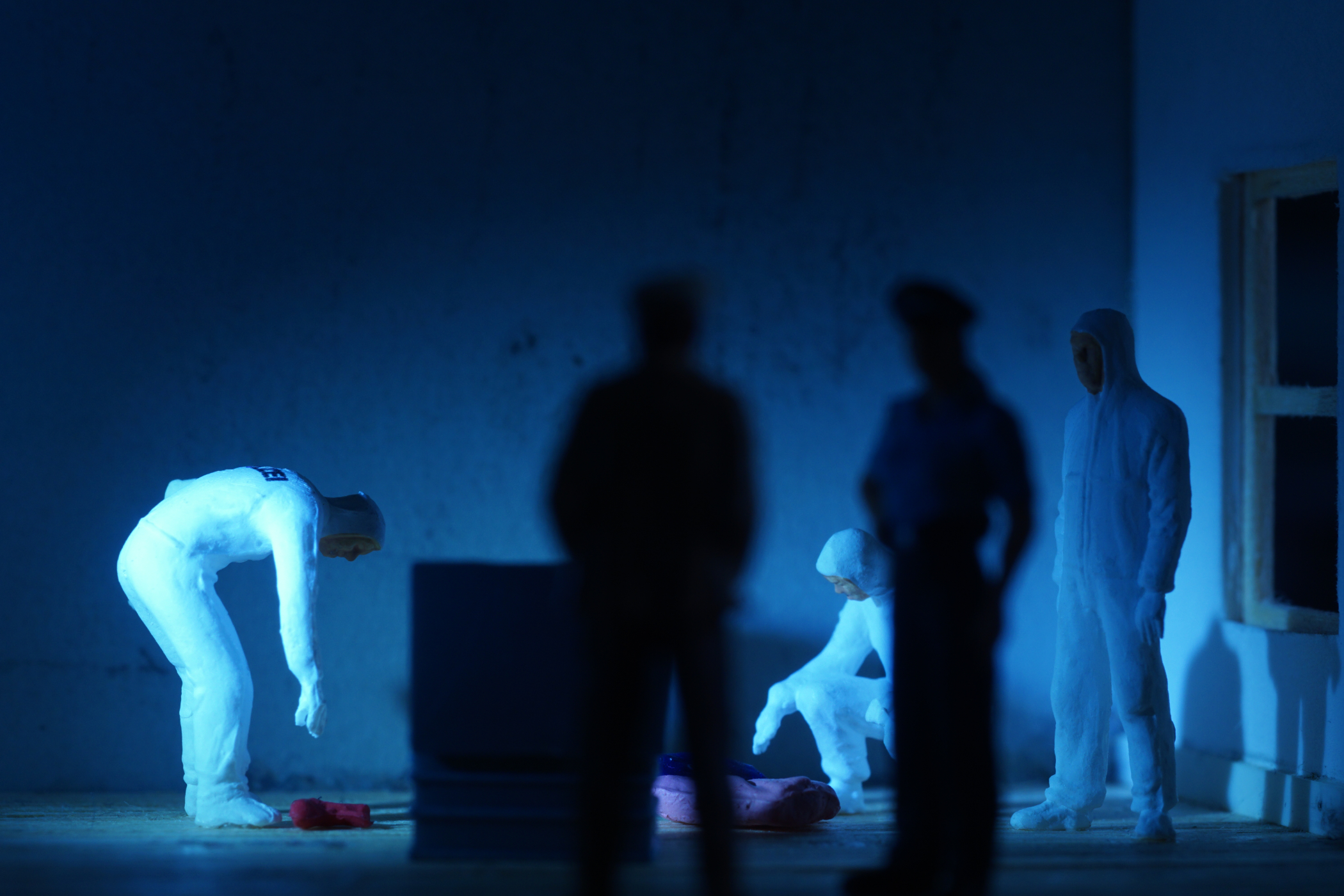
“What have we got?” – “One dead joke, sir. GSW to the punch line. Timing seems a bit off, don’t you think?”
An entry for this month’s toy photography challenge: dad jokes. And since the picture is also a bit dramatic, this might also be a fitting entry for this week’s lens-artists challenge.
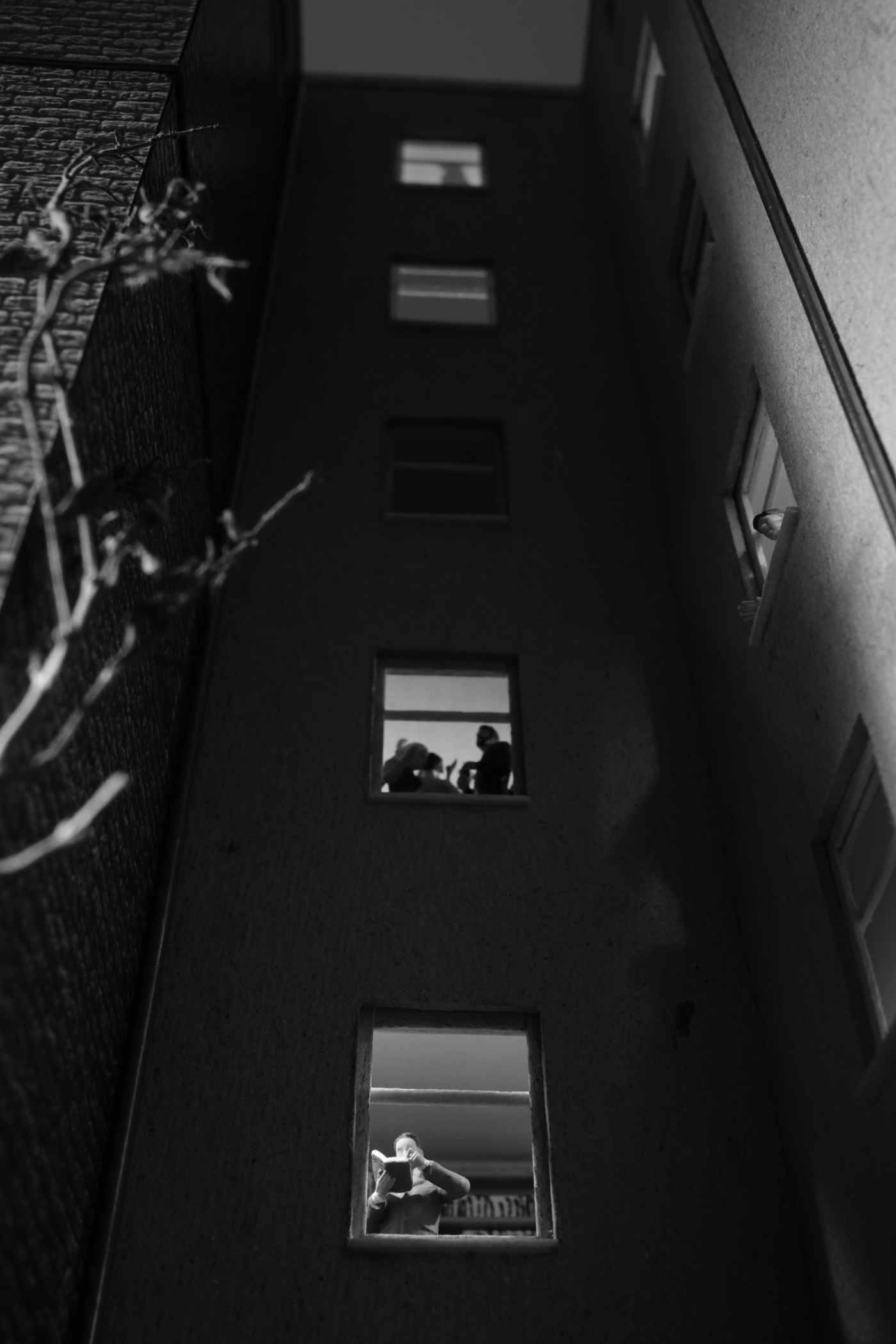
“Take my Harlem Air Shaft. So much goes on in a Harlem air shaft. You get the full essence of Harlem in an air shaft. You hear fights, you smell dinner, you hear people making love. You hear intimate gossip floating down. You hear the radio. An air shaft is one great big loudspeaker. You see your neighbors’ laundry. You hear the janitor’s dogs. The man upstairs’ aerial falls down and breaks your window. You smell coffee. A wonderful thing, that smell. An air shaft has got every contrast. One guy is cooking dried fish and rice and another guy’s got a great big turkey. Guy-with-fish’s wife is a terrific cooker but the guy’s wife with the turkey is doing a sad job. You hear people praying, fighting, snoring. Jitterbugs are jumping up and down always over you, never below you. That’s a funny thing about jitterbugs. They’re always above you. I tried to put all that in Harlem Air Shaft.”(Duke Ellington in Hear Me Talkin’ to Ya. The Story of Jazz as Told by the Men Who Made It, ed. by Nat Shapiro & Nat Hentoff. New York, 1966)
This picture was inspired by the Duke’s description of a Harlem air shaft (his inspiration). I practically saw the picture in front of me when I read the above lines. It took a while to build this, but here we go … I am so lucky there’s the last chance challenge with the lens-artists.
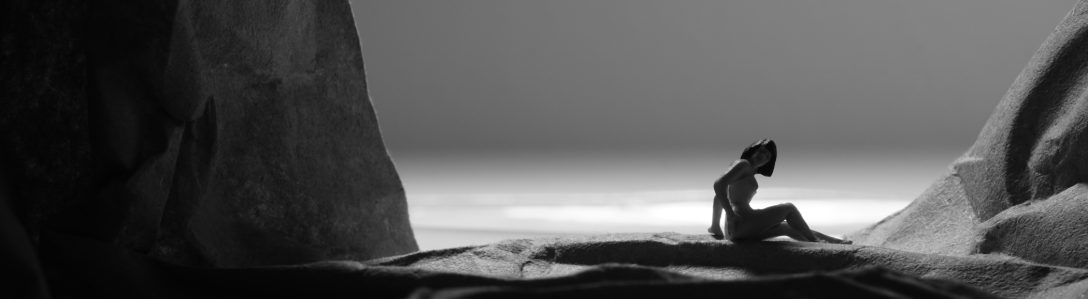
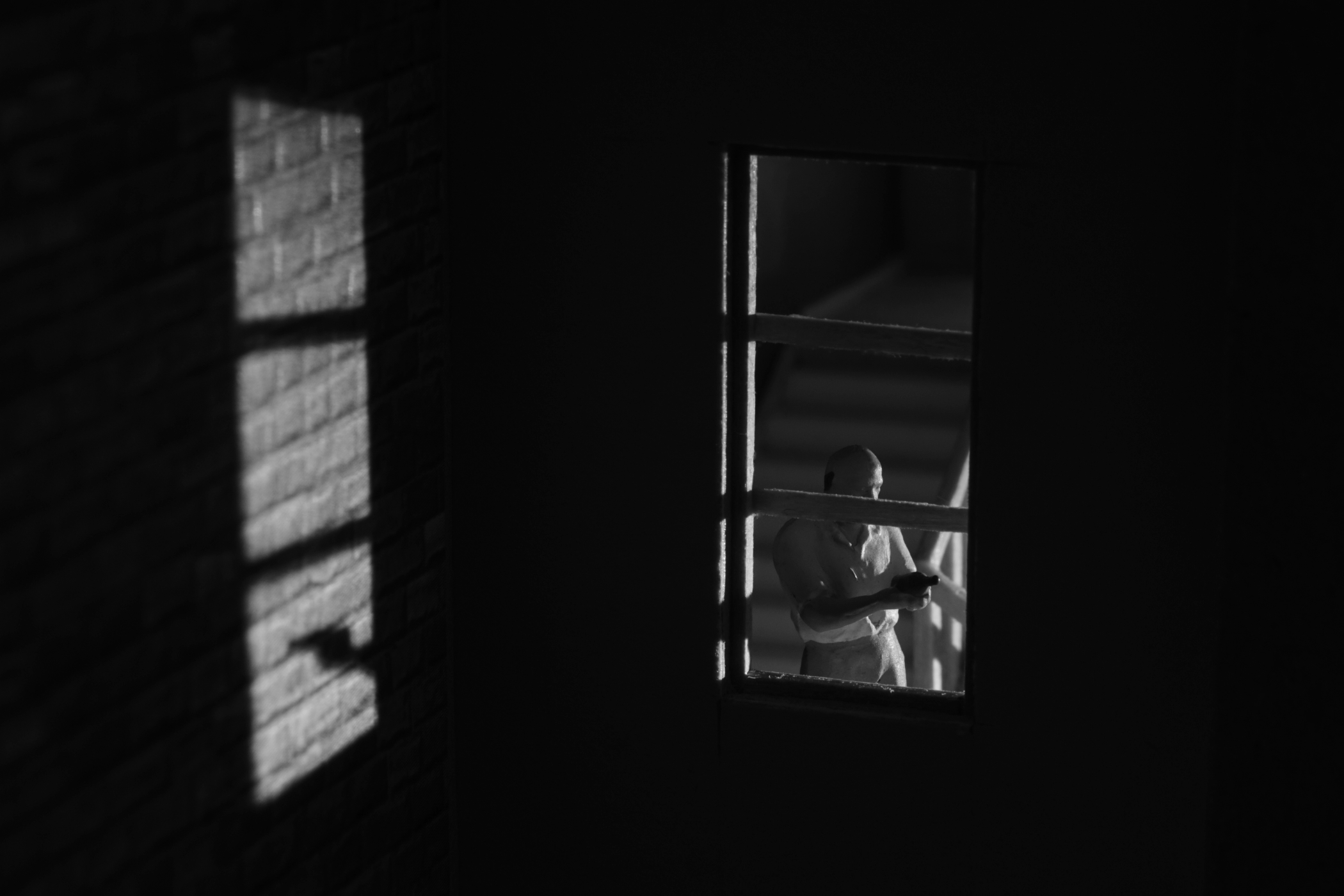
LAPC #265: Black and White or Monochrome | Black and white is a preferred choice when I photograph miniature toys. It seems to add another layer of abstraction to pictures which already show abstract depictions of reality – these toys and models have to be abstract due to their size (and my building skills). I feel that the additional layer of abstraction sort of distracts from the fact that we are dealing with tiny plastic toys, but I still cannot grasp why I would think so.
As for the procedure, I firmly believe that shooting color and only creating a black and white picture in editing is not the best way to go at it. A black and white picture is not simply a ‘normal’ picture minus the color. I feel that we pay more attention to light, develop a keener eye for slight nuances as well as stark contrasts in brightness when we are not distracted by colors, and can’t rely on contrasting colors. But maybe that’s just me.
 empire of lights