Take Five

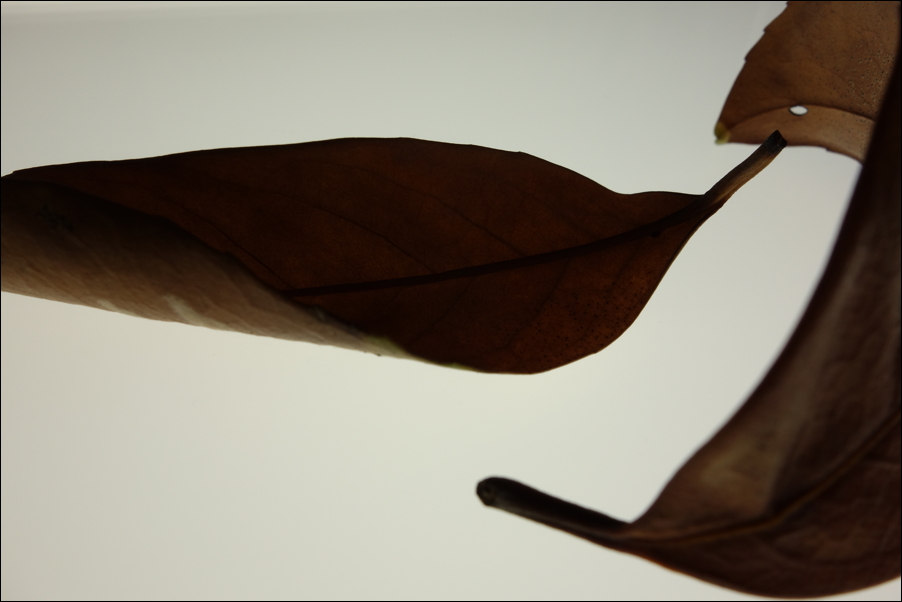
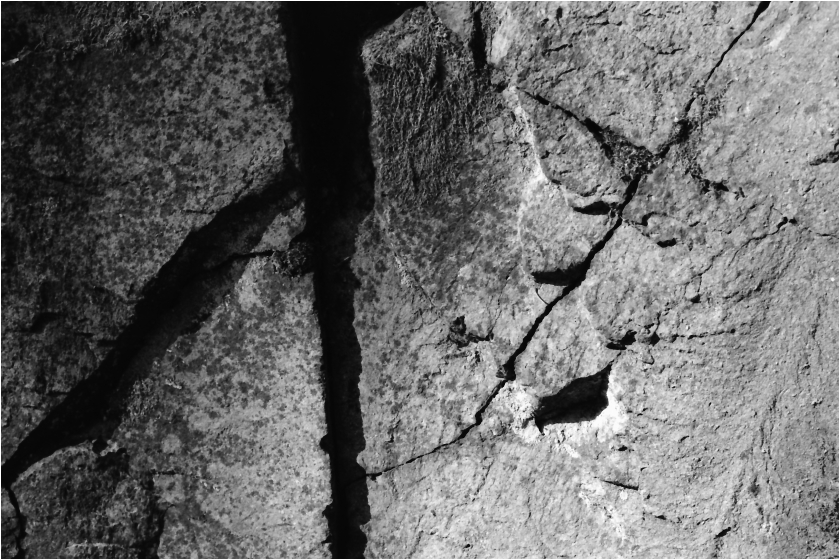
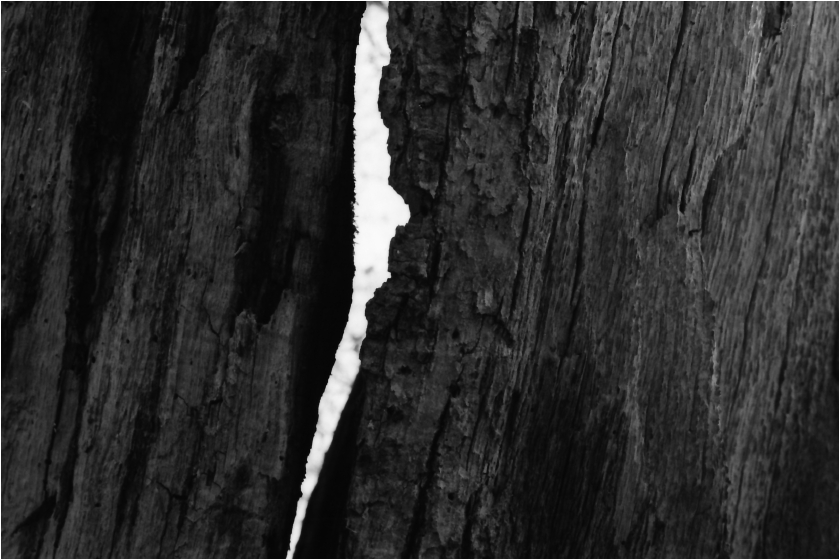
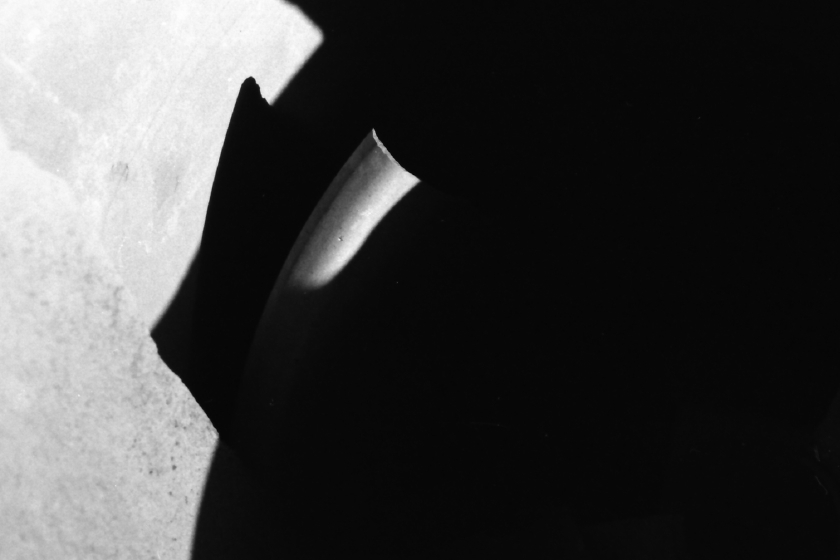
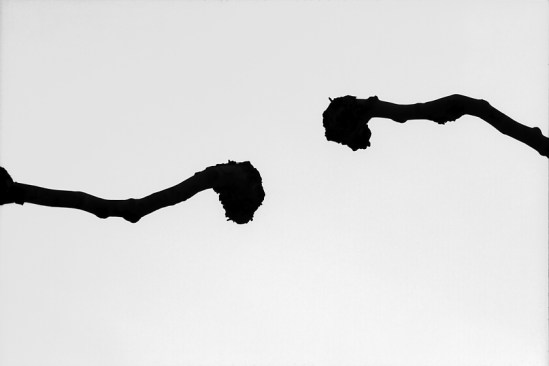
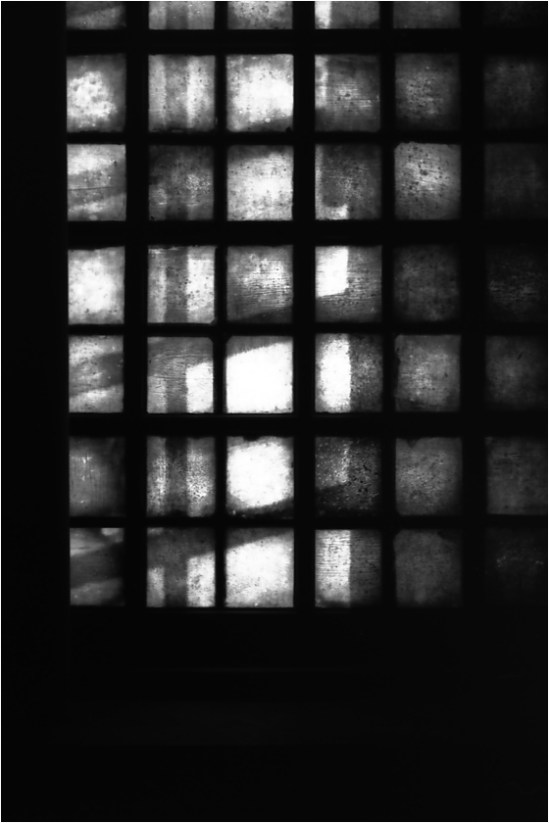
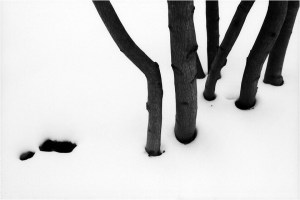
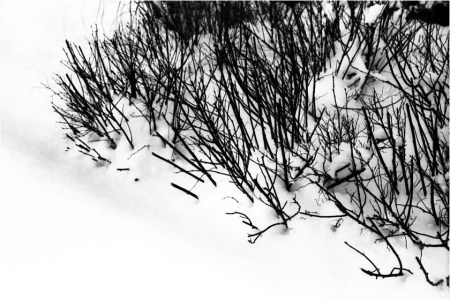
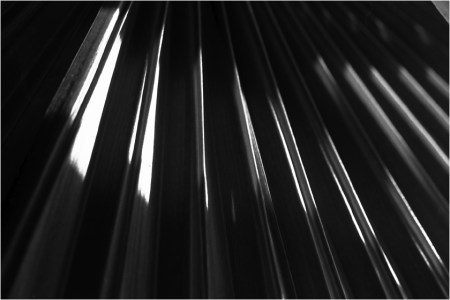
282-36279-12286-20 269-22 275-07 288-06… get six! Picking my favourite pictures made in 2012 was not easy to begin with. After I had finally narrowed the choice down, I realized I love thinking in pairs: Are there combinations that work better than others, juxtapositions I would check out were I to put together an exhibition? I think there are … and then Number 5 begged to be paired with an additional picture – hence the extra.

Why this choice? What do I like about these pictures? Scrolling through them there is one thing I realize to my own surprise: Though I see something abstract in all of them, they all seem to contain stories (which I leave for you to figure out).

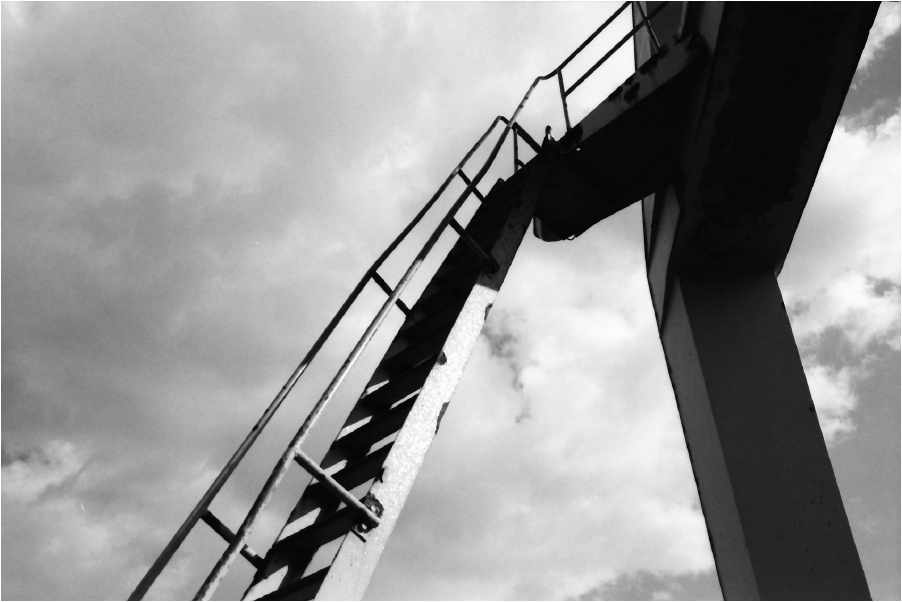
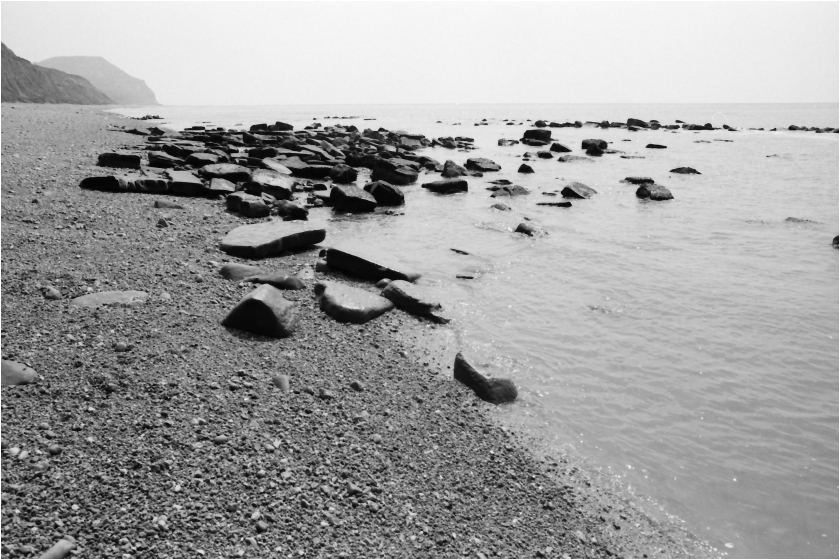
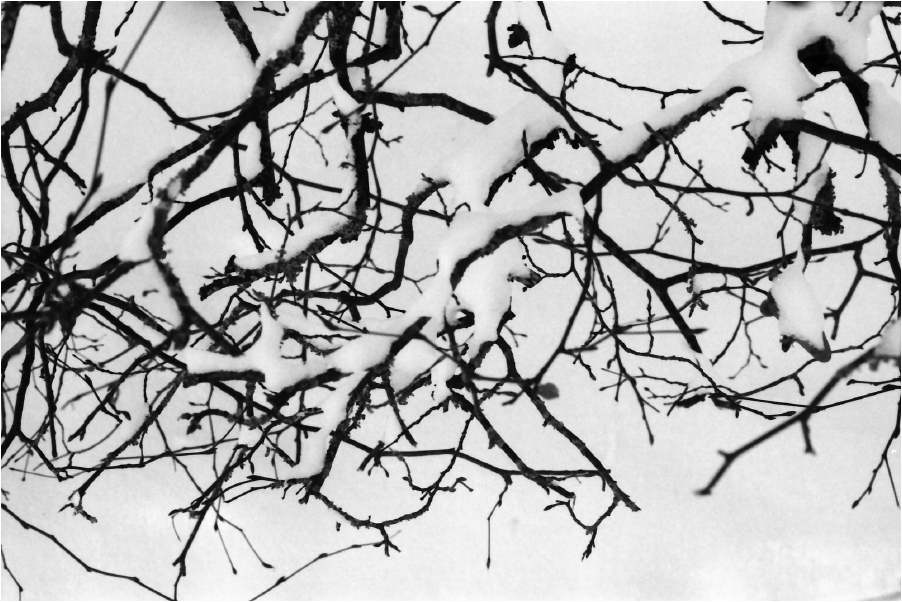
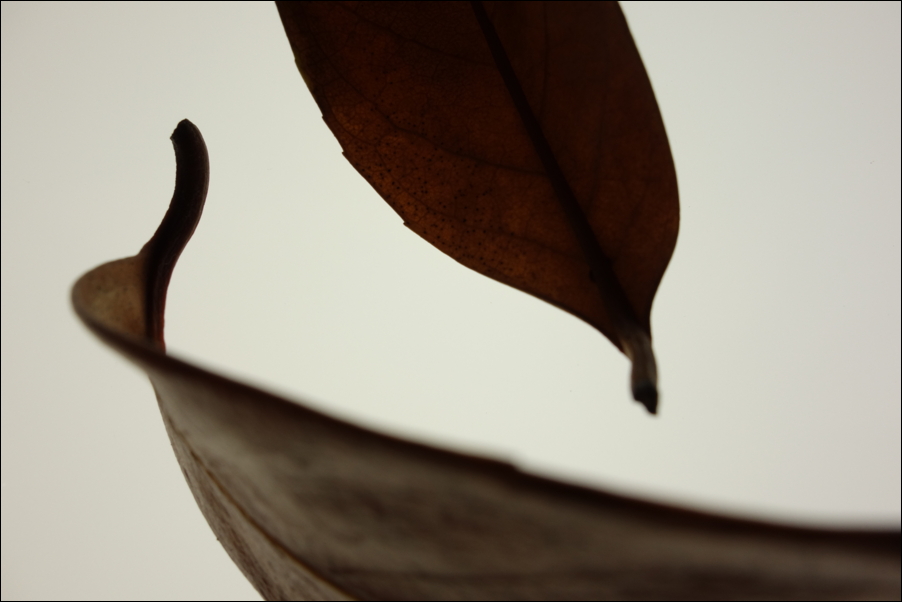
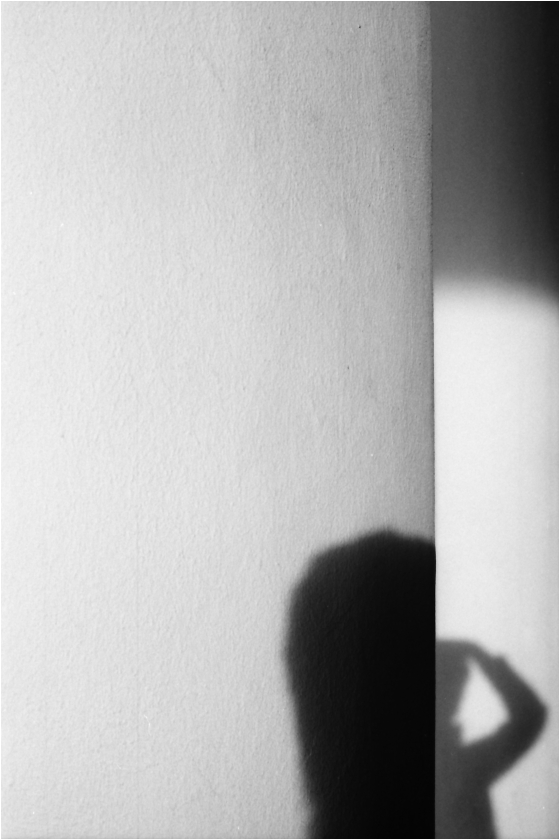
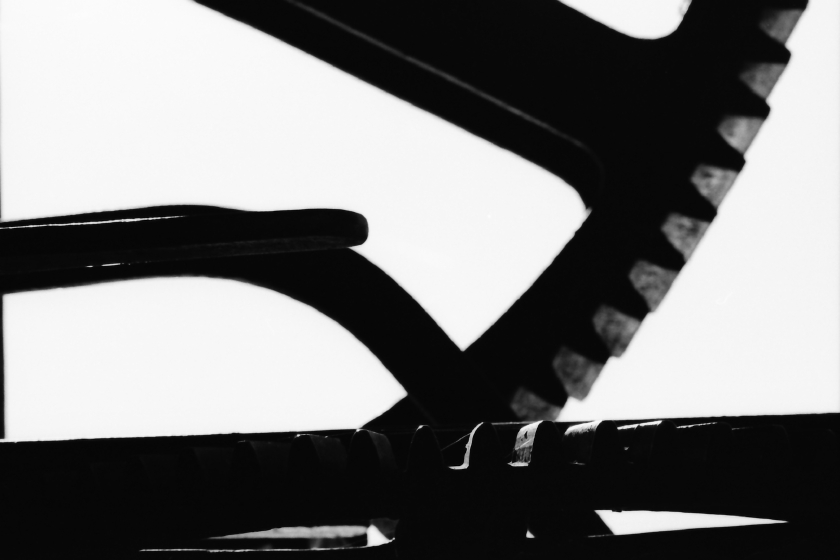
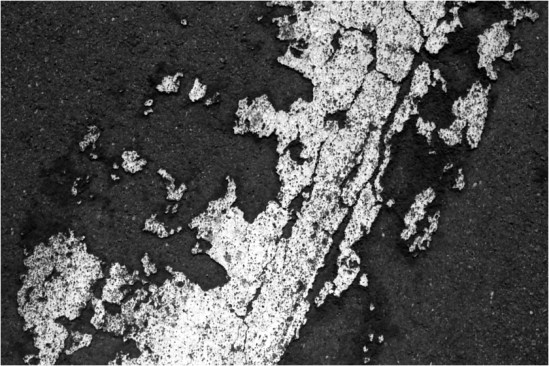
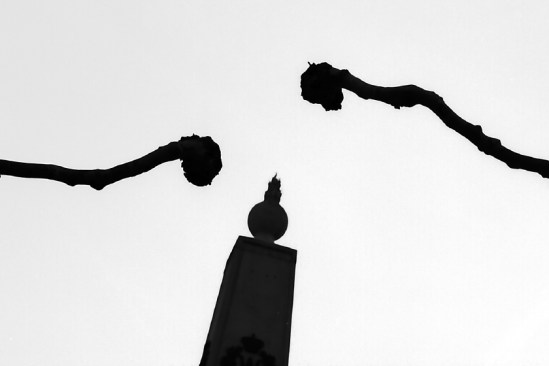
The pictures were taken travelling England, Germany, and the Netherlands. Top to bottom: Kranzplatz Playground, Wiesbaden, Germany; Alfriston Clergy House, England; Port of Hamburg, Germany; beach near Westkapelle on Walcheren, Netherlands; Charmouth, England; and just up the street from our place in Wiesbaden. They are my entry for this week’s photo challenge.

Square

“I’m not interested in the texture of the rock, or that it is a rock, but in the mass of it, and its shadow.” Ellsworth Kelly

A picture and a page today: Along with this picture and the noteworthy quote there are some thoughts on abstract photography on a new page today. See them as work in prgress – and feel free to disagree.

The Dialectics of Decay (Frankfurt Bonames Airfield)

In her critique of photography Susan Sontag points out that photographers love to depict decay. She links this preference both to a nostalgic view of the world – Roland Barthes points into a similar direction when he says that a photo takes the form of Aorist – and to aestheticizing ‘unworthy’ objects. To her, photographing decay implies marking the decaying object as beautiful. As much as I agree with the link between a photo and the past,  I ask myself if there is not more to photographing decay.

If you roughly distinguish between nature and civilization, decay could be seen as nature (re-)claiming its reign. I am always delighted with finding traces of ‘the tooth of time’ in an urban setting (or on an abandoned army airfield) because they follow laws and principles which are alien to ours.

Photographing these traces superimposes yet another structure: an aesthetic idea. A picture of a decaying object thus accumulates various layers of principles, natural and human. Incompatible as functionality, erosion and the photographer’s own ideas may seem, they are all framed in the image of a decaying object.

Stand There!

Photographs serve the illusion of realism, of showing the Eiffel Tower or the bombing of a Vietnamese village as it really was. Perspective strongly supports this illusion. It denotes three-dimensional space on the basis of construction rules that have been derived from optics. A camera basically follows the same optical laws we find at work in the Renaissance theory and practice of perspective. It is a machine for making central perspectives, very much like the devices contrived by Dürer and others to facilitate the drawing of perspectives.

Perspective does not only denote space. It also positions the spectator: Central perspective works best if you stand right in front of the picture’s vantage point. You are thus made part of the geometrical arrangement; your (ideal) position, your eye is inscribed into the picture. For the image to captivate you and work its illusion, you have to cooperate, positioning yourself accordingly. Illusion comes at the price of a loss of freedom for the spectator.

Would absence of perspective, emphasizing the picture‘s flatness, then mean that spectators regain a certain amount of freedom, being allowed to stand wherever they like, without missing anything?

If this were the case, speaking of Informel paintings as ‘democratic’ may not only cover the picture elements (which are all equal) but also the ‘positioning’ of spectators. Confronted with a painting by, say, K. H. Sonderborg, spectators can position themselves freely, they can pick any spot in front of the picture they like. There is a certain openness to this, some kind of laissez-faire a Renaissance painting following the rules of central perspective might lack.

.

Sources

Hans Belting, Florenz und Bagdad. Eine westöstliche Geschichte des Blicks. München: Beck, 2008.

Willi Kemp, “Das deutsche Informel”, Le grand geste! Informel und Abstrakter Expressionismus 1946 – 1964. Hg. v. museum kunst palast. Köln: DuMont, 2010.

Holzwege

Because of its connotations, Holzwege does not translate well. The word literally denotes forest paths or tracks (Wege) that only serve for transporting wood (Holz) from where it was felled and do not connect two places. Since these paths tend to end in the middle of nowhere, hikers who take these paths are likely to get lost. Hence “auf dem Holzweg sein” (being on the wood path) means being errant, lost, wrong.

I found these beech logs rotting in a forest. Decay has marked them in a way that evokes landscapes seen from above, or entirely insignificant maps

Speed

Daily photos, 365 Photos a year… I can see the appeal of this.* But as for now, I  do not travel that fast. Depending on weather, opportunities and interests (or motivation), it can take me two or three weeks to fill a 36-exposure roll of film. Afterwards, I have to allow a couple of days for processing. After receiving the pictures from the lab, I look over the contacts, trying to decide which picture is worth prinitng and what should be scanned and go online. Once I am done with this, I know my pictures quite intimately.

That’s the when I usually get excited about how well I succeeded in making this or that picture. I might hurry to get these exposures scanned and present them to you … or let them lie around untouched for yet another while. Waiting a couple of weeks entails that if I still like a picture after the first rush of euphoria is over – then this picture most likely meets my idea of a good one.

Why do I write this? Speedy publication can be lots of fun. But slowing down can be just as fine: If you are not sure what to think of your picture today, just wait. Time will help you take a step back, consider the picture in a different context and figure out what it means to you.

* There are some great sites for viewing daily pictures: The Window Project 2010 is one of them, and I would also like to mention the daily pictures displayed by Lynn Wiles. And whoever enjoys daily assignments will find them here.

Making Pictures

This was not originally written to appear in this blog. However, I realize that my thoughts about photography are taking a turn that would appear less intelligible without this short description. I thus translated it to appear here. The original text is also available.

Speaking of ‘an eye for photography’ I understand that the photographer sees the world as a reservoir of potential pictures and that he will do everything he can in order to make the best of this potential.

Maybe he will find a picture remembering Andreas Feininger once said that everything worth being photographed is worth being photographed a couple of times. Such repeated scrutiny of a subject may take place at very different times of the day, or the year. It so allows for numerous variations of a theme.

Once you start producing variations your perspective may widen, from a particular lake to water in general, from this one flower to constellations of flowers and leaves (and finally to plants ‘as such’).

Meanwhile, it is interesting to observe how the picture changes when you omit colour. This omission does not produce a lack, but rather emphasizes the structures of the subject which will now appear more clearly. Black-and-white also seems to imply a relation to the graphic arts (such as etchings or woodcuts).

You may try to push abstraction still further. In doing so, you might not aim at the kind of clarity you seek when involved with documentation, being satisfied only when you present yet more aspects and more details – but rather at a greater clarity that allows the picture to stand for itself, independently of whatever it might depict.

No Void

In the frame, there is always something, anything; it is all over the picture.

Thus, whatever seems to be all black or all white is not ever nothing. There was (is?) a referent, a piece of reality this part of the picture refers to.

In one of the most brilliant books on photography (Camera Lucida. Reflections on Photography), Roland Barthes understood that this is a crucial aspect when it comes to the nature of photographs.

Aesthetic Investigation

As I consider the way I photograph (or why I photograph, for that matter) I tend to think that photography is an aesthetic investigation into the nature of things. And a fine one, too.

‘Aesthetic’ implies that I do not necessarily have to know what plant exactly I am photographing. Rather, my considerations focus on the picture itself. I can see what the plant looks like, but I want to learn whatever I can about the plant-picture.

Abstract Photography?

Somebody once said that photography must inevitably represent something and that a photograph will always be a footprint of the real. Apparently, a photograph cannot transcend the real. A photo will always be a picture of something. This opinion seems to be fuelled by spectators who feel uneasy facing a photo they cannot decode: “What does this picture show? What’s this a photo of?” Because they know that every photograph must be a picture of something.

But is it really impossible for a photograph to go beyond depiction? I do not think so. Classic black-and-white photography is a form of abstraction, some kind of departure from reality.

In order to further transcend the real object, I asked myself how abstract a photo could be. Now I am asking myself how abstract it should be.

Initially, Eduardo Chillida’s pictures inspired me to make photographs which are abstract beyond classic black and white, eliminating the greys so that the only pictorial elements would be either deep black or white. The resulting forms, structures and pictures were supposed to be of utter simplicity. Thus, the following picture may acutally resemble a rather drippy abstract painting.

But I came to realize that playing with ‘pure form’ had its limits, that the contents of those pictures tended to be rather superficial. I felt that total abstraction was not possible – and not even desirable. Still, I wanted to find out more about the relationship between real space and the picture plane.

A survey of reality seemed a worthy goal. But I wanted this survey to materialize in pictures that not only refer to reality but also to themselves.

This is one of the results:
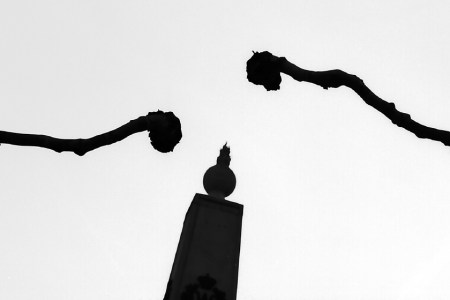
And, after a further step towards depicting things (and after a couple of failures) I came up with this one:
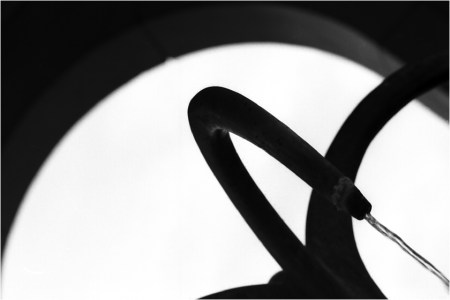
Finally, I gave up the extreme contrasts:

All these may be examples of a kind of photography that gave up narrative. They may fail to fulfil most spectators’ expectations. And I do not even know they really ‘work’. But one thing is for sure: These thoughts and photographic attempts have taught me a lot.