Thank You, Visitors!

Andreas Feininger once explained that we should not worry too much about people not liking our pictures; after all, for every picture, there would eventually be a spectator who liked it. To be frank, I read this but somehow did not really believe it.

A year of weekly blogging taught me better. You taught me better. I found overwhelming encouragement in the comments you wrote. Now I know that almost every picture I care for will find its beholder. I understand that the only thing I should worry about is my own appraisal of my pictures: Do they meet my standards? If so, there is really nothing to fear from going public.

Theoretically, this is not a very fresh insight. But you all helped me to turn theoretical knowledge into a real life experience.

I thank you for this, and for commenting, and for visiting and keeping your eyes open. I hope that I was – and will be – able to do something similar, at least for some of you.

Best wishes for 2012!

tms

The Dialectics of Decay (Frankfurt Bonames Airfield)

In her critique of photography Susan Sontag points out that photographers love to depict decay. She links this preference both to a nostalgic view of the world – Roland Barthes points into a similar direction when he says that a photo takes the form of Aorist – and to aestheticizing ‘unworthy’ objects. To her, photographing decay implies marking the decaying object as beautiful. As much as I agree with the link between a photo and the past,  I ask myself if there is not more to photographing decay.

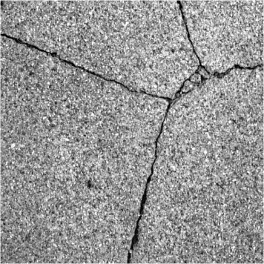
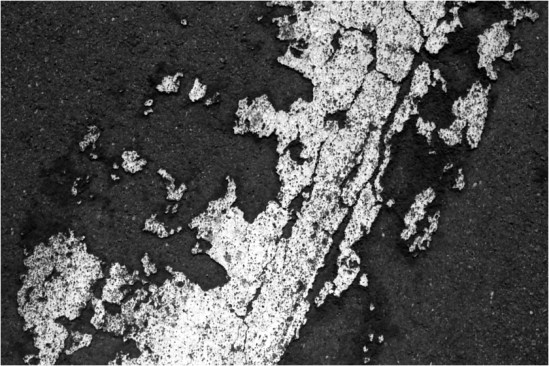
If you roughly distinguish between nature and civilization, decay could be seen as nature (re-)claiming its reign. I am always delighted with finding traces of ‘the tooth of time’ in an urban setting (or on an abandoned army airfield) because they follow laws and principles which are alien to ours.

Photographing these traces superimposes yet another structure: an aesthetic idea. A picture of a decaying object thus accumulates various layers of principles, natural and human. Incompatible as functionality, erosion and the photographer’s own ideas may seem, they are all framed in the image of a decaying object.