

Tag: Abstract Photography
Contrast: Curve and Straight Lines

This is the last of my contributions to a great Weekly Photo Challenge. Thanks to Judith of A View From The Woods who made me think a bit harder and go through my archives in search of conceptual contrasts. This picture comes from this blog’s earliest post, but it seemed so suitable.
Contrast: Solid and Liquid
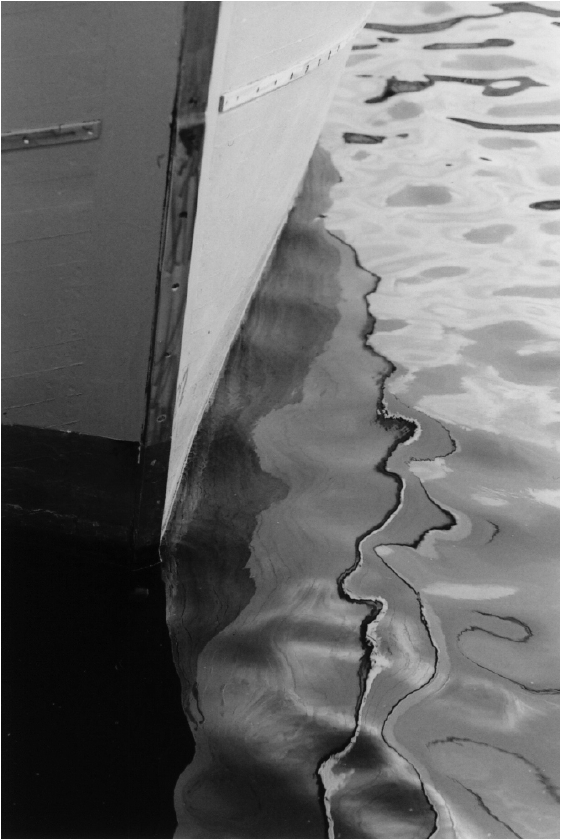
Contrast: Patterns Permanent and Passing
 This is my counterpoint for Judith (A View From The Woods) – and also another contribution to the Weekly Photo Challenge.
Wind, Sand, Movement
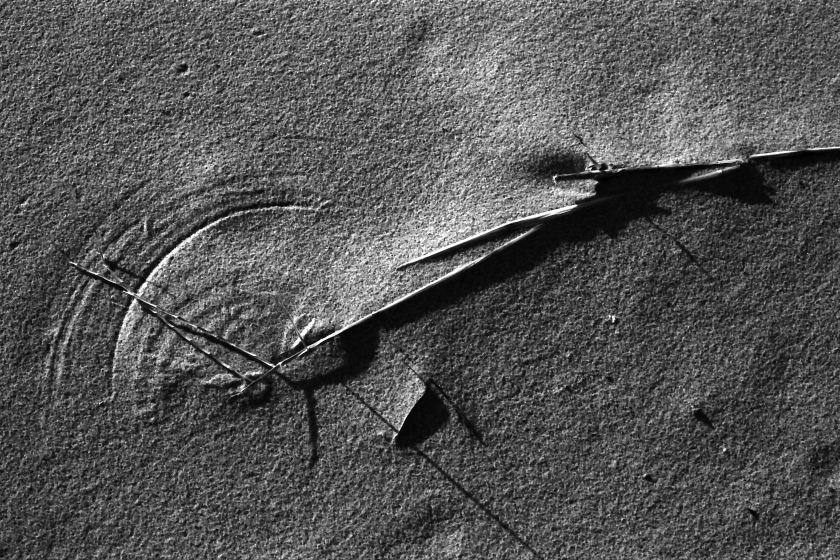
 Strolling the beach near Vlissingen (Holland), we found these small bits and pieces, their shadows exaggerated by a low evening sun. Then we realized that there was just enough breeze to drive small sticks over the beach and wave loose twigs and strings. Yet the wind force did not suffice to move the sand particles; hence every minute movement left its trace.
Optimism
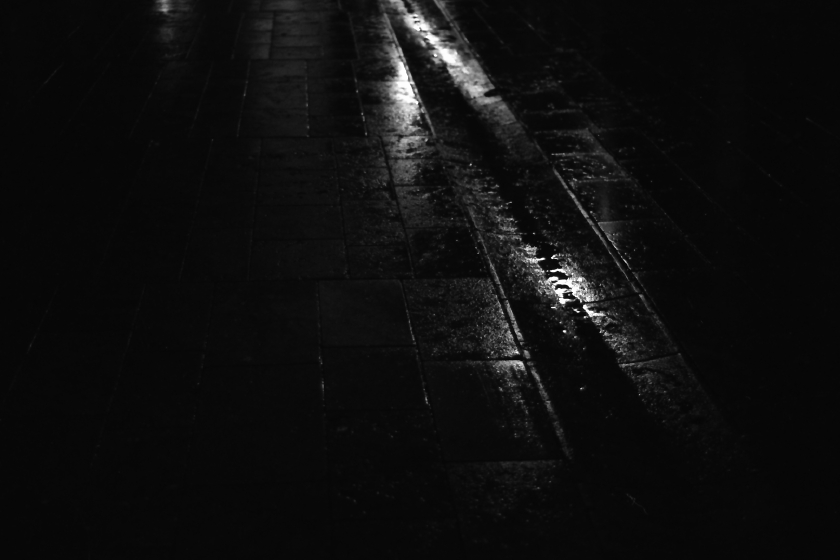 …or whatever you call seeing light in a gutter on a cold, wet and dark morning.
Wald IV

Park III
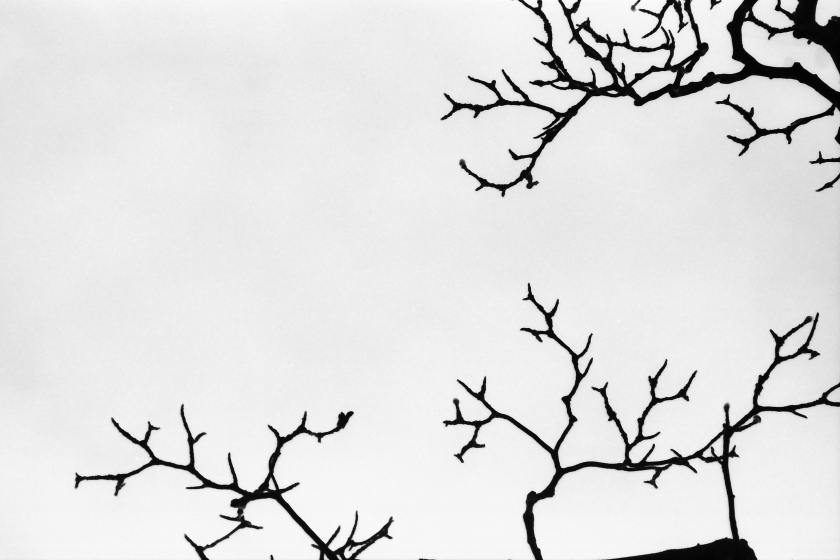

Wald III


Wald II

Weekly Photo Challenge: Winter

Deck


Gear


Volume / Density

Defining Place: Willem van Oranje Memorial (Wiesbaden)

Here!


The Dialectics of Decay (Frankfurt Bonames Airfield)

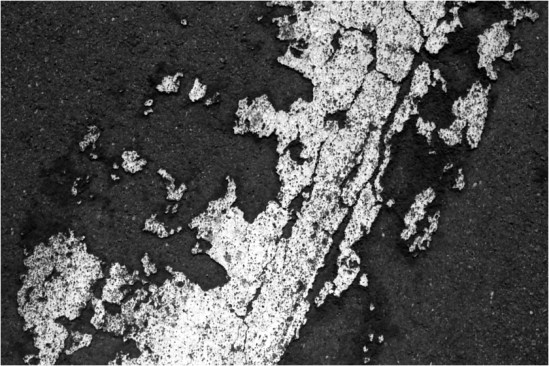
In her critique of photography Susan Sontag points out that photographers love to depict decay. She links this preference both to a nostalgic view of the world – Roland Barthes points into a similar direction when he says that a photo takes the form of Aorist – and to aestheticizing ‘unworthy’ objects. To her, photographing decay implies marking the decaying object as beautiful. As much as I agree with the link between a photo and the past, I ask myself if there is not more to photographing decay.
If you roughly distinguish between nature and civilization, decay could be seen as nature (re-)claiming its reign. I am always delighted with finding traces of ‘the tooth of time’ in an urban setting (or on an abandoned army airfield) because they follow laws and principles which are alien to ours.
Photographing these traces superimposes yet another structure: an aesthetic idea. A picture of a decaying object thus accumulates various layers of principles, natural and human. Incompatible as functionality, erosion and the photographer’s own ideas may seem, they are all framed in the image of a decaying object.
The Construction of Place


Rainy Summer Blues


Anchor Chains (Iona)
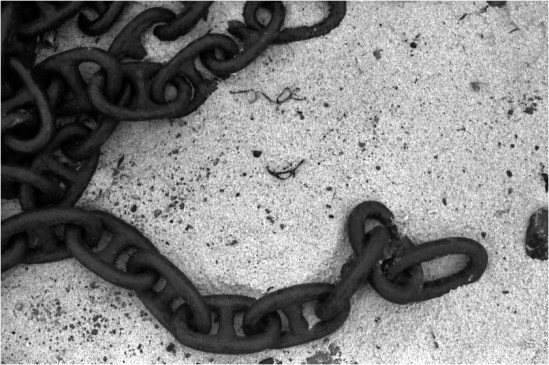
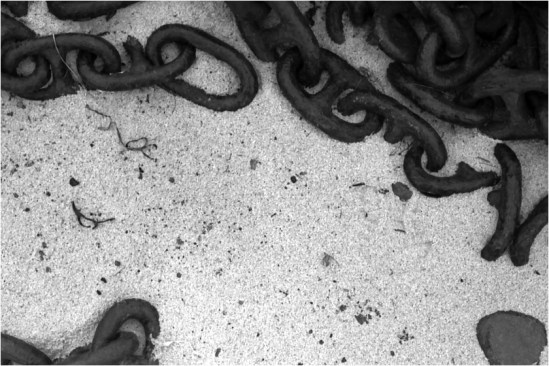
“Das Zeug hat seinen Platz, oder aber es ‘liegt herum’, was von einem puren Vorkommen an einer beliebigen Raumstelle grundsätzlich zu unterscheiden ist. Der jeweilige Platz bestimmt sich als Platz dieses Zeugs zu… aus einem Ganzen der aufeinander ausgerichteten Plätze des umweltlich zuhandenen Zeugzusammenhangs.” (Martin Heidegger)
 empire of lights