


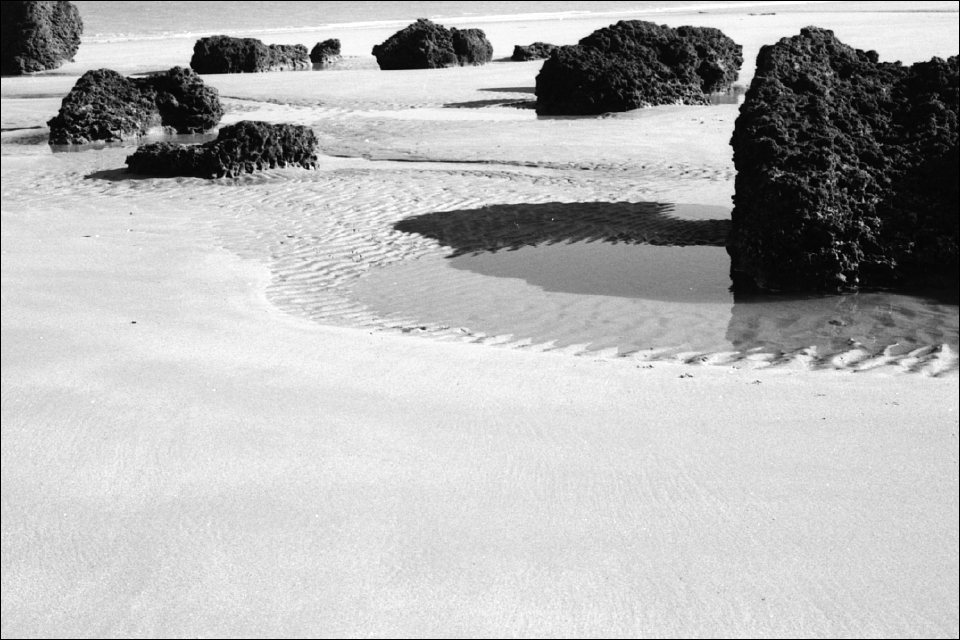
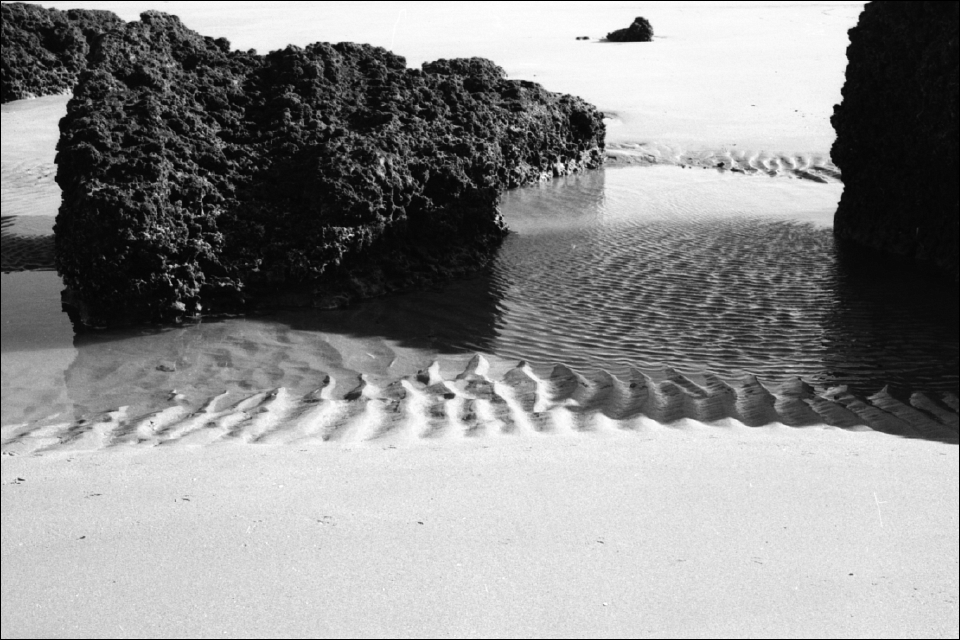
Les vaches noires


Layers
Fragmente einer Sprache des Schreckens [2]


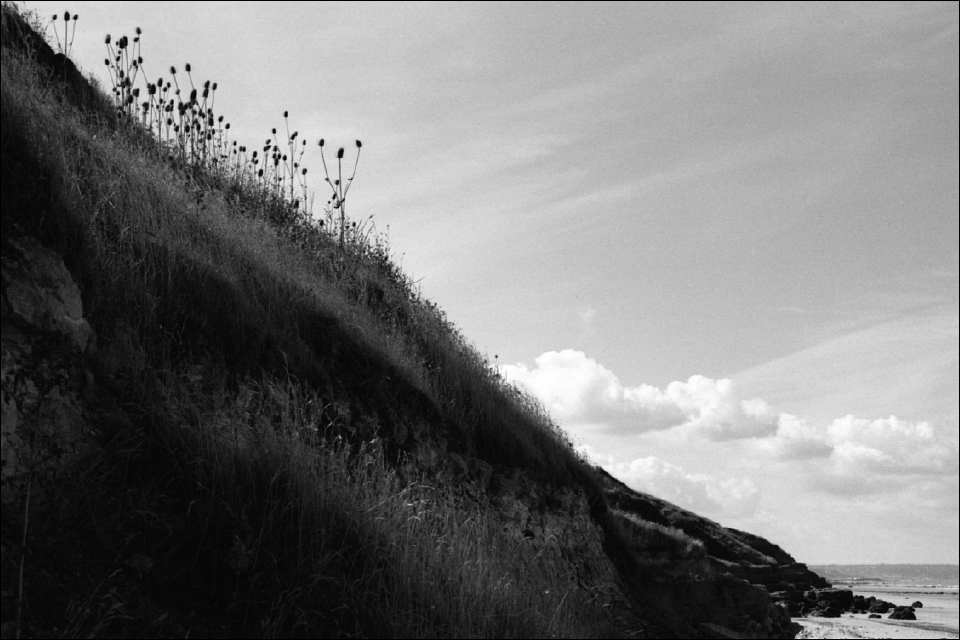
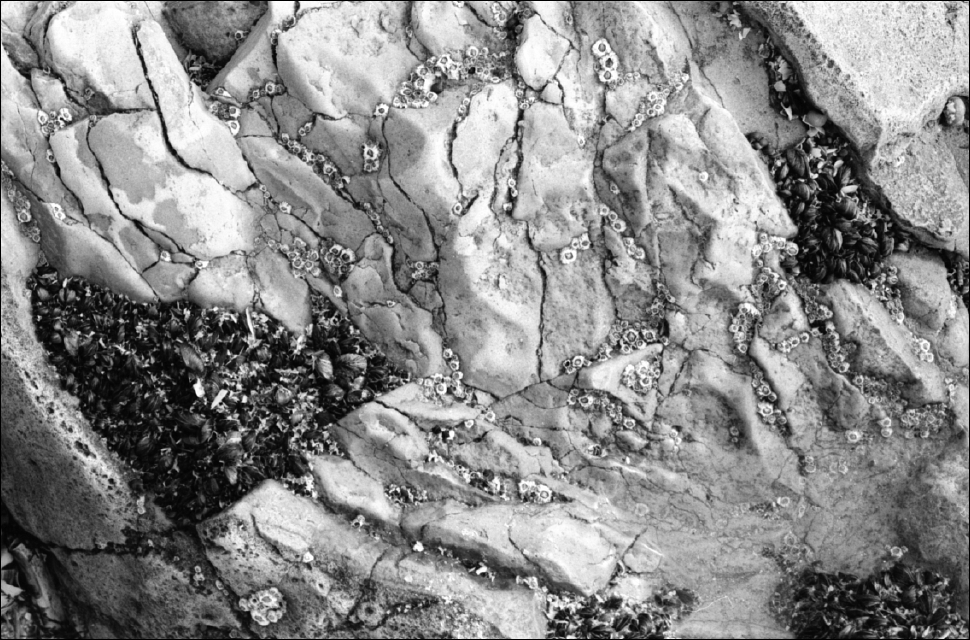
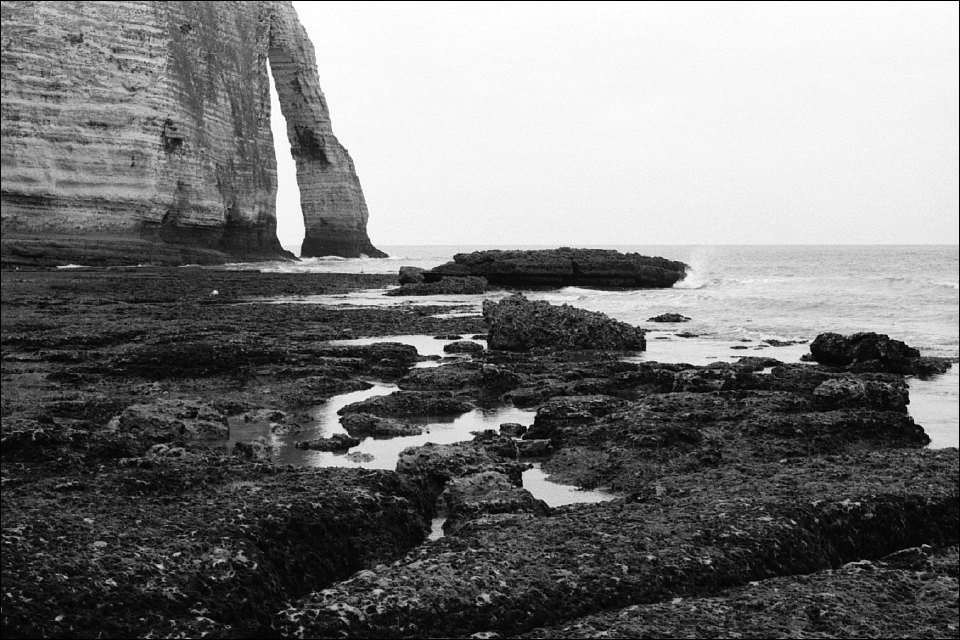
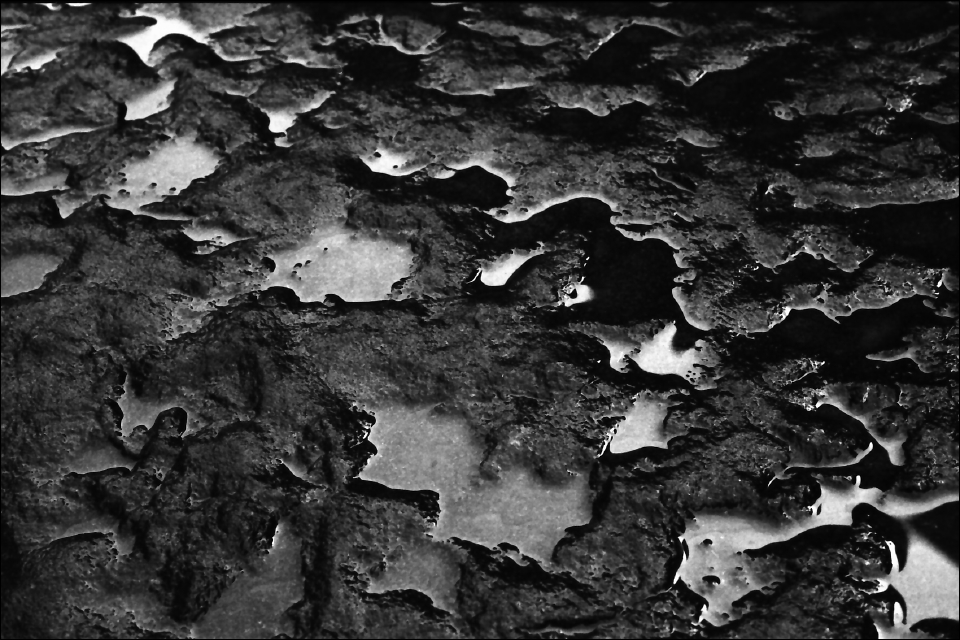
While it was bright and sunny in Longues-sur-Mer, visibility in Arromanches-les-Bains was poor (as BBC Weather would put it), rendering most of my pictures a harsh, almost rough black and white that reminds me of Capa’s D-Day pictures. So I pick smoother pictures here, asking myself if they might be too pretty for the subject. (Top: Arromanches; bottom: Longues)
Fragmente einer Sprache des Schreckens


Batterie Longues-sur-Mer. People killed here. People died here. A tractor tows a plough over the fields, back and forth; birds sing, gulls scream. I smell the sea.
I know the guns reached far and were not easily destroyed. However, I’d like to imagine that after the first destructive blows the remaining soldiers realised that their chances dwindled. And ran.
People run around and photograph the cannons. I don’t want cannons; they are not appealing, not even visually. I try to make a picture of this space that stifles me.
.
[This week’s photo challenge reminded me that today might be an adequate day for posting this.]
Harbour Hues and Horizons

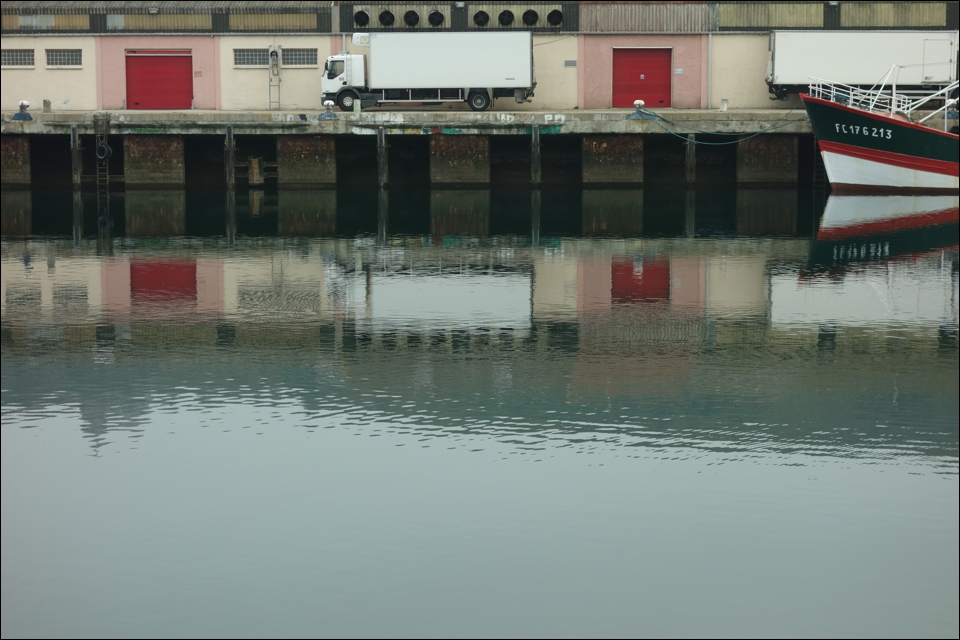
Although I could not resist this title (the wonderful alliteration) this is really a contribution to this week’s photo challenge: My favourite horizons can be found be the sea, or at least close to water. Therefore they are occasionally upside down.
En route
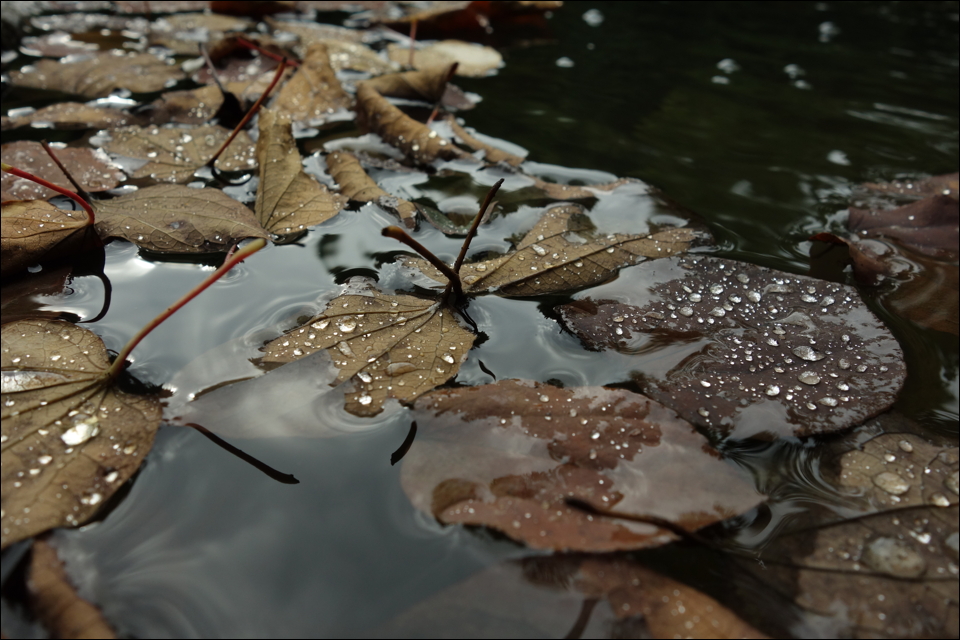


Brown hues, interpreting both the Weekly Photo Challenge and this week’s Travel Theme. The floating leaves and the elaborate hairdo were spotted at Les Jardins du Pays d’Auge, Combremer; the onions come from the famous kitchen garden of Château de Miromesnil, Tourville-sur-Arques; and the last two pictures happened during a walk in the port of Fécamp.
Infinitely Busy

Pondering the subject of this week’s photo challenge, I realize that water points towards the concept of infinity in so many ways: On the shore, I often see (or actually do not see) the sea touch the sky. I witness the tides, and with that I suddenly understand water is always going somewhere. Like infinity, I cannot grasp it. The picture shows water running over a sandy beach in a rivulet. Capturing its movement, I found a beast’s eye –
Infinite
 “The windows of the soul are infinite, we are told. And it is through the eyes of the soul that paradise is visioned. If there are flaws in your paradise, open more windows!” (Henry Miller, Big Sur and the Oranges of Hieronymus Bosch) – This contribution to the Weekly Photo Challenge shows the Colombier (dovecote) in Vendeuvre.
Ironworks. Bridges.

Balance

Monopteron II
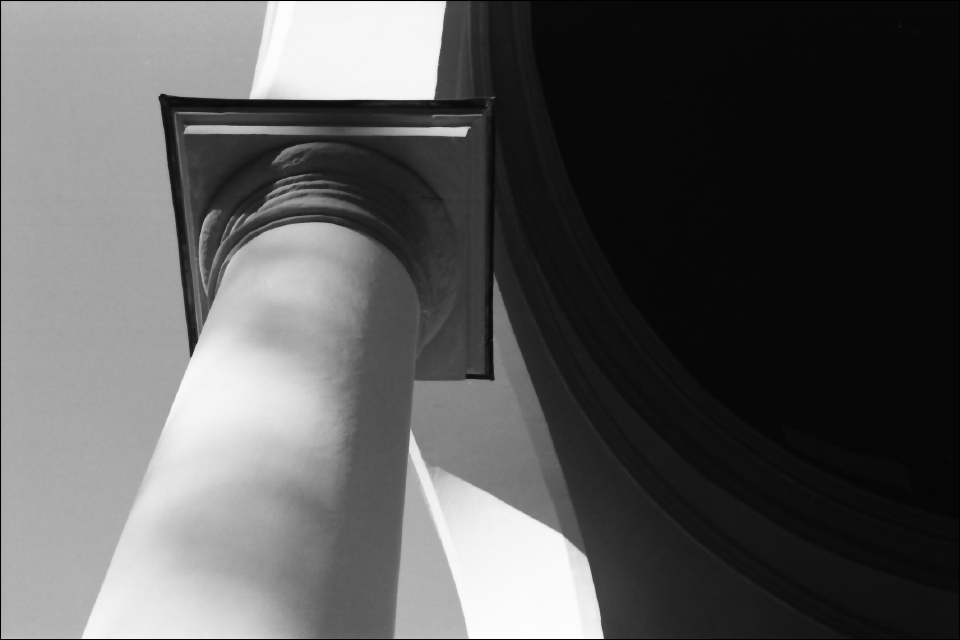

Leuchtturmtürstopper

One thing I love about my native language: there is no limit to the length of words. Throw it all together and have fun! Ein Leuchtturmtürstopper would be a lighthouse door stop.
Ironworks. Running Around.

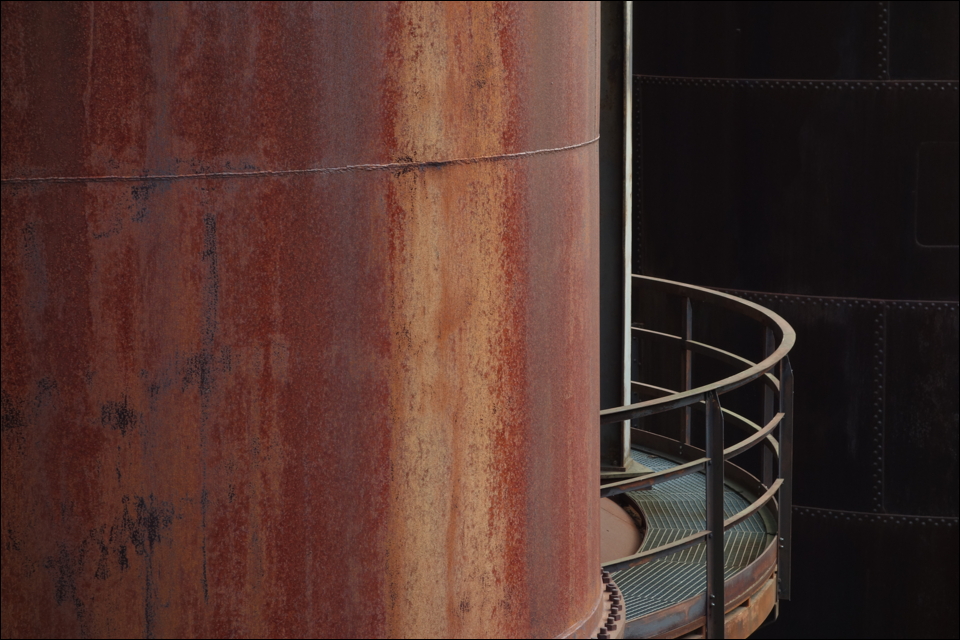
Ironworks
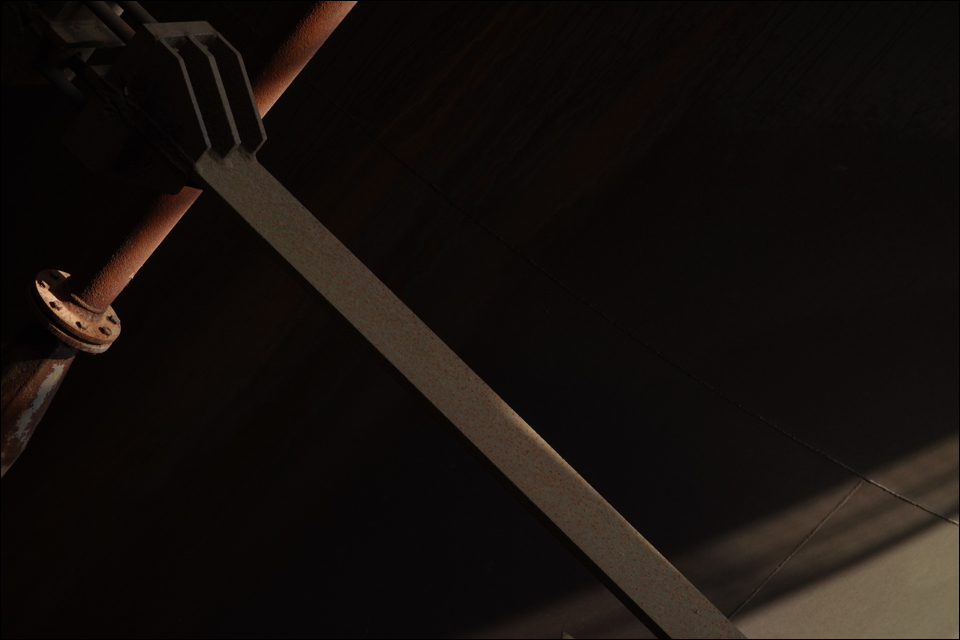
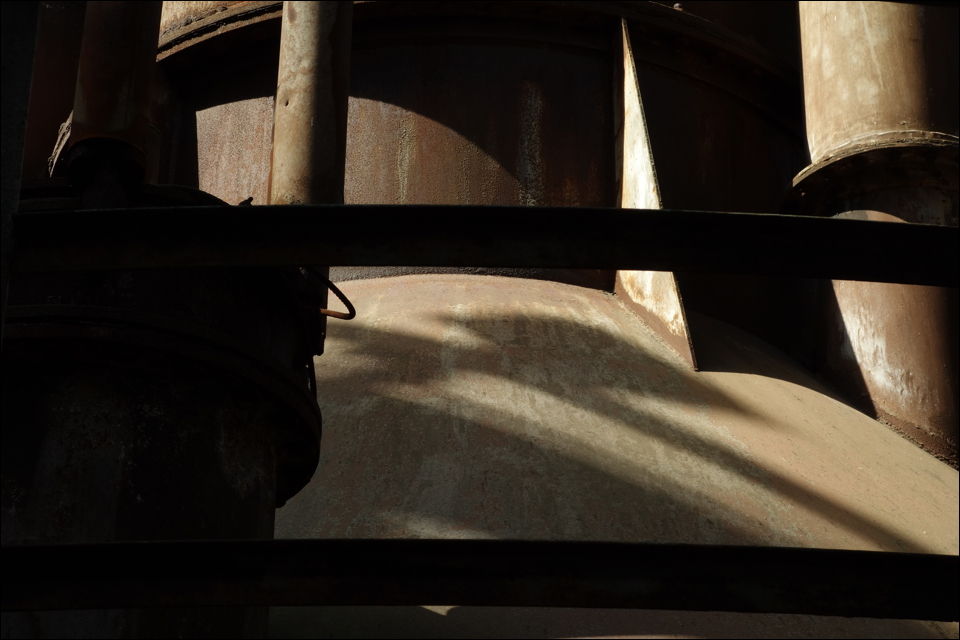
Back on the Blog
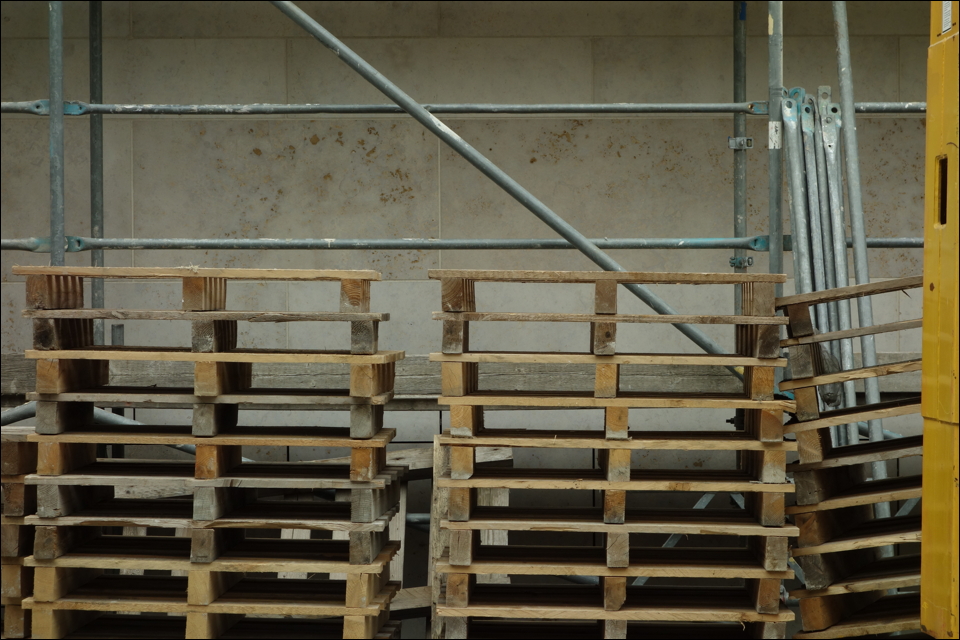 Conversation instead of presentation: A couple of moths ago I thought I needed a home page. But I did not do much with it, and it did not do much for me – other than that the blog almost vanished in the background and I could not show more than one picture per post on the blog’s first page. All looked good to me, but as I realized I love the experiment, the dynamics and the exchange of opinions more than just presenting, I grew more and more dissatisfied. So: Dear readers, here is a new layout I hope you’ll enjoy.
Heterotopia II


Heterotopia
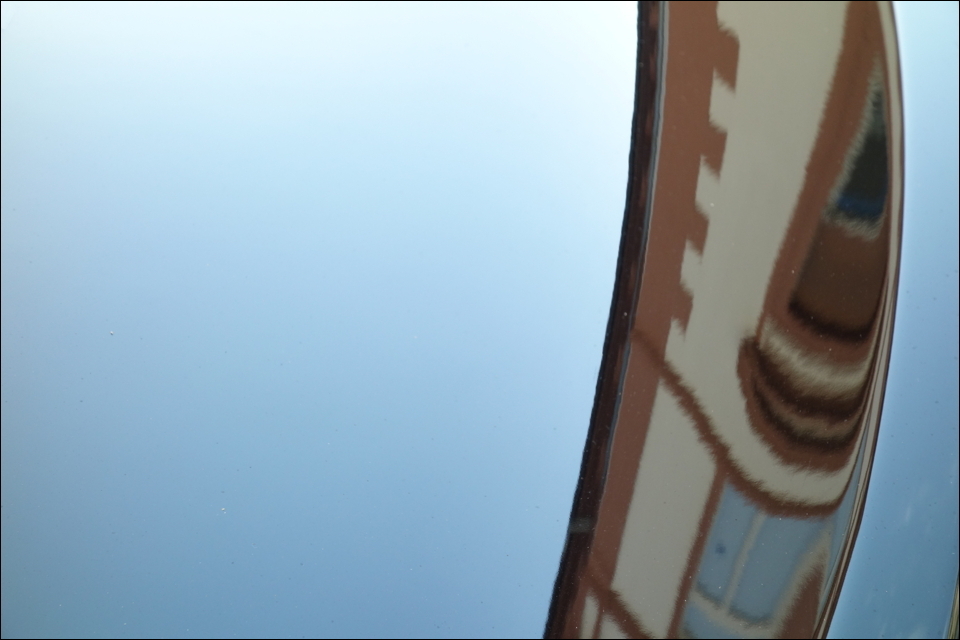
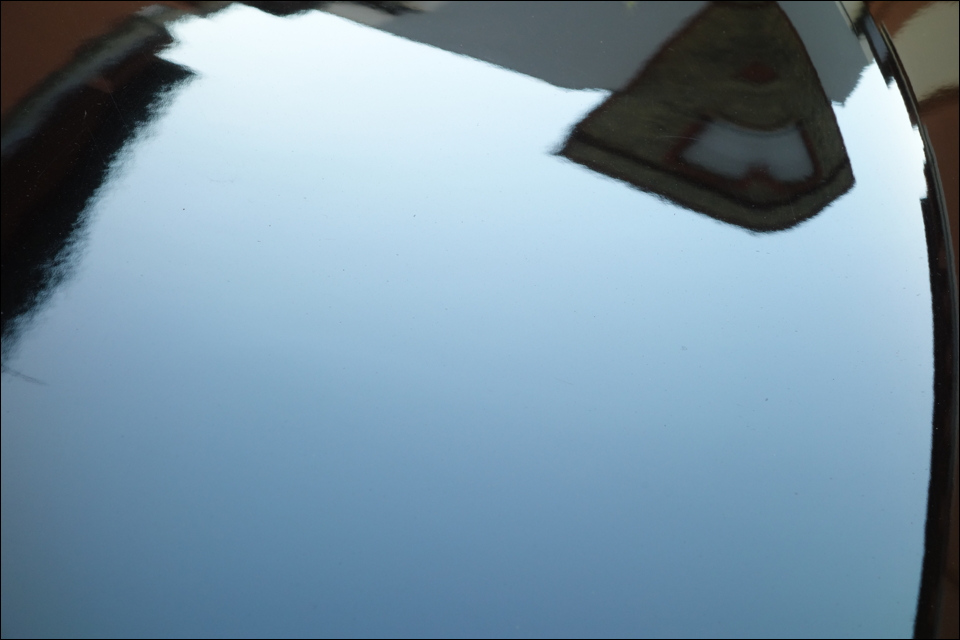
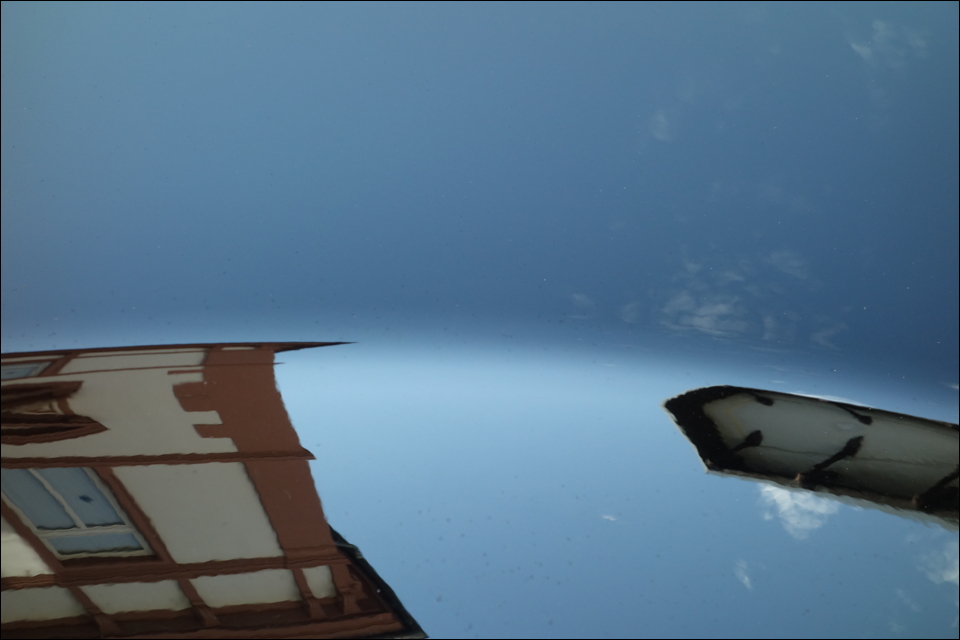 Digging into some literature on an altogether different topic, I stumbled upon this paragraph:
“I believe that between utopias and […] heterotopias, there might be a sort of mixed, joint experience, which would be the mirror. The mirror is, after all, a utopia, since it is a placeless place. In the mirror, I see myself there where I am not, in an unreal, virtual space that opens up behind the surface; I am over there, there where I am not, a sort of shadow that gives my own visibility to myself, that enables me to see myself there where I am absent: such is the utopia of the mirror. But it is also a heterotopia in so far as the mirror does exist in reality, where it exerts a sort of counteraction on the position that I occupy. From the standpoint of the mirror I discover my absence from the place where I am since I see myself over there. Starting from this gaze that is, as it were, directed toward me, from the ground of this virtual space that is on the other side of the glass, I come back toward myself; I begin again to direct my eyes toward myself and to reconstitute myself there where I am. The mirror functions as a heterotopia in this respect: it makes this place that I occupy at the moment when I look at myself in the glass at once absolutely real, connected with all the space that surrounds it, and absolutely unreal, since in order to be perceived it has to pass through this virtual point which is over there.” (Michel Foucault, Of Other Spaces. Heterotopias)
It made me wonder: Could photographs be related to mirrors? And could a photograph possibly be some kind of heterotopia? After all, photos seem to trigger a strange exchange between my position – here, in front of the picture – and the place they show which is, in most cases, not here, but inevitably there. I am here, looking at a ‘there’ which is very real as a picture and very absent as an object: “There is no there there,” I am tempted to say.
Light Investigations


One Corner, Two Angles
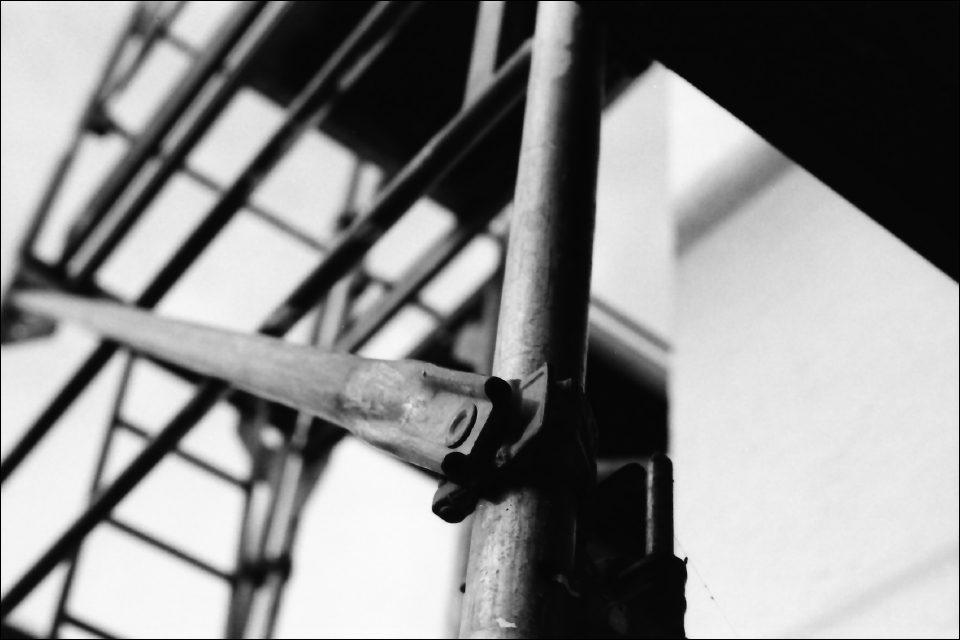
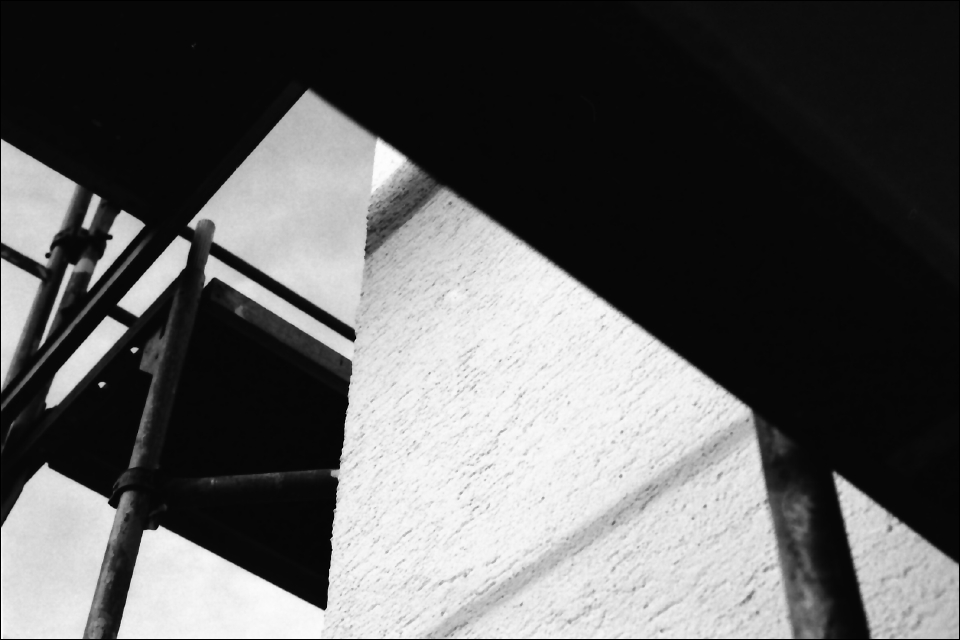
The original idea was to try out a different film, the Kodak PLUS-X 125, processed with Rodinal. Judging from the scanned pictures, my first impression is that it has a rougher, perhaps more old-fashioned look than the T-MAX 400 I usually prefer … While experimenting I realized that these two also seem to illustrate the idea of this week’s photo challenge.
 empire of lights